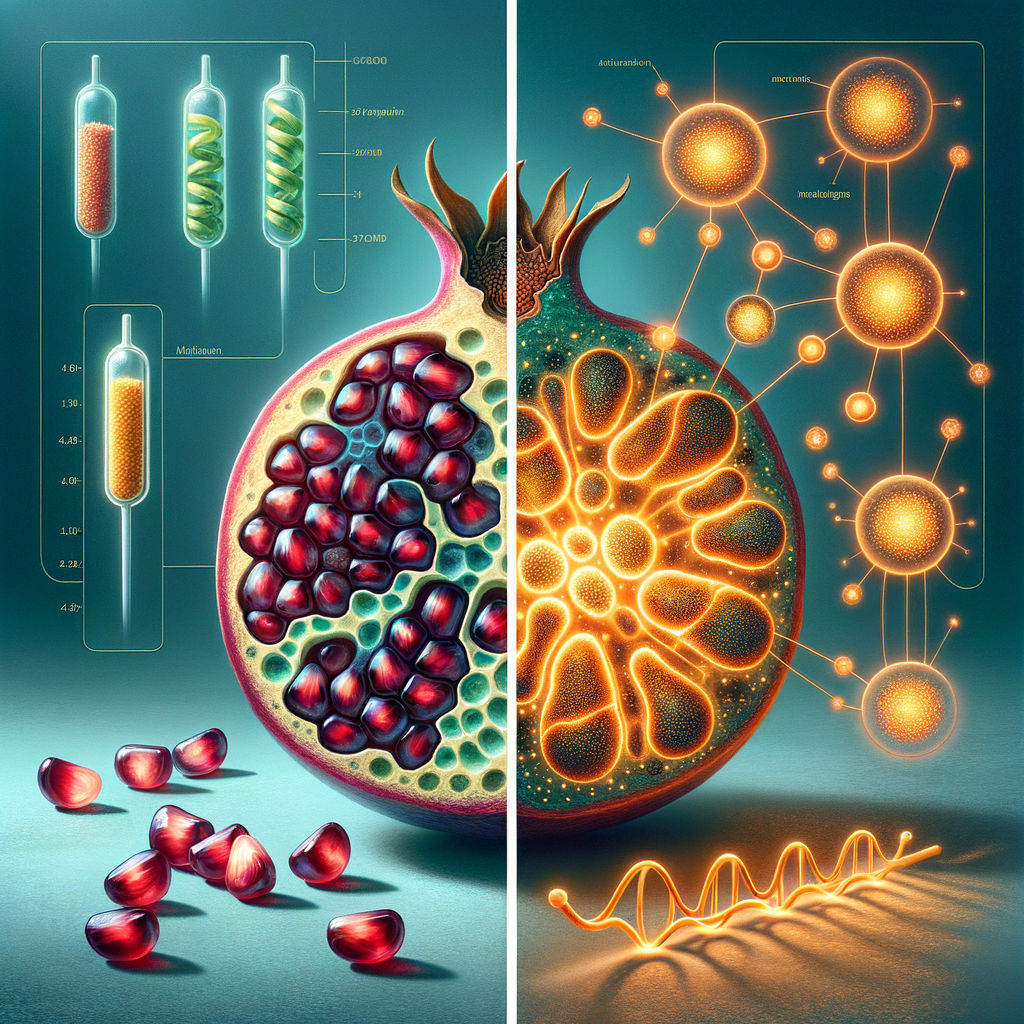
Urolithin A: The Pomegranate Metabolite Rejuvenating Mitochondria
Your mitochondria—the cellular powerhouses generating energy for every heartbeat, every thought, every movement—begin deteriorating in your 40s. Damaged mitochondria accumulate, energy production drops, and you feel it: fatigue, declining muscle strength, slower recovery from exercise. But what if your body had a built-in cleanup system to remove dysfunctional mitochondria and replace them with fresh ones?
Enter urolithin A, a natural compound produced when your gut bacteria metabolize polyphenols from pomegranates and walnuts. Recent clinical trials reveal that urolithin A activates mitophagy—your cells’ quality control mechanism for recycling damaged mitochondria—improving muscle endurance and cellular energy in aging adults. Published research in Nature Metabolism and human trials from 2023-2024 position urolithin A as one of the most promising mitochondrial rejuvenation compounds discovered in the last decade.
If you’re navigating your 40s, 50s, or 60s and searching for evidence-based strategies to maintain muscle strength and cellular vitality, this deep dive into urolithin A will equip you with the science, dosing protocols, and practical guidance you need.
What Is Urolithin A?
Urolithin A is a metabolite—a compound produced when gut bacteria break down ellagitannins and ellagic acid, polyphenols abundant in pomegranates, walnuts, berries, and some nuts. Unlike most polyphenols that exert direct antioxidant effects, urolithin A works differently: it acts as a mitophagy inducer, triggering your cells to identify and recycle dysfunctional mitochondria.
Discovered in the early 2000s, urolithin A remained a curiosity in nutritional biochemistry until 2016, when researchers at École Polytechnique Fédérale de Lausanne (EPFL) published groundbreaking findings in Nature Medicine. They demonstrated that urolithin A extended lifespan in C. elegans (roundworms) by up to 45% and improved muscle function in aging rodents—without any genetic modification, simply by enhancing mitochondrial quality control.
Here’s the catch: not everyone produces urolithin A efficiently. Your ability to convert ellagitannins into urolithin A depends on your gut microbiome composition. Studies suggest only 30-40% of people have the right bacterial species (primarily Gordonibacter strains) to produce therapeutic levels from diet alone. This variability has driven interest in direct urolithin A supplementation, bypassing the microbiome bottleneck.
How Urolithin A Rejuvenates Mitochondria: The Mitophagy Mechanism
To understand urolithin A’s impact, you need to grasp mitophagy—literally “mitochondrial eating.” Mitochondria contain their own DNA and replicate independently, but over decades, they accumulate mutations, produce excessive reactive oxygen species (ROS), and lose membrane integrity. Damaged mitochondria can’t generate ATP efficiently and may even trigger cellular aging pathways.
Healthy cells employ mitophagy to tag defective mitochondria for autophagy (cellular recycling). Proteins like PINK1 and Parkin mark damaged mitochondria, which are then engulfed by autophagosomes and broken down, with components recycled into new organelles. This process declines sharply with age—by your 60s, mitophagic efficiency may drop 50-60% compared to your 20s.
Urolithin A reactivates this dormant cleanup system. Research shows it upregulates mitophagy genes and stabilizes mitochondrial membranes, prompting cells to replace damaged mitochondria with fresh copies. In Nature Metabolism (2019), scientists demonstrated urolithin A increased mitophagy markers in human skeletal muscle biopsies by 30-50%, correlating with improved mitochondrial respiration (oxygen consumption rate).
The result? Cells maintain a younger mitochondrial pool, sustaining energy production, reducing oxidative stress, and preserving muscle function as you age. Think of it as trading in your fleet of aging, inefficient delivery trucks for newer models—without changing the drivers.
Clinical Evidence: What Human Trials Reveal
Urolithin A has progressed from animal models to human clinical trials, with results published between 2022-2024 providing compelling evidence for its mitochondrial aging benefits.
ATLAS Trial (2022): Muscle Endurance in Middle-Aged Adults
The ATLAS study, published in JAMA Network Open, enrolled 66 sedentary adults aged 40-64 with below-average mitochondrial function. Participants received either 500mg urolithin A daily or placebo for four months. Primary outcomes measured 6-minute walking distance and hand grip strength—functional markers of muscle endurance.
Results:
- Urolithin A group improved 6-minute walk distance by 11% (65 meters on average)
- Plasma biomarkers (ceramides) associated with mitochondrial dysfunction decreased by 23%
- Muscle biopsy analysis showed increased mitophagy gene expression (PINK1, Parkin) by 40-60%
- No adverse effects reported; supplement was well-tolerated
The study concluded urolithin A “significantly improved muscle endurance and mitochondrial health markers in aging adults,” positioning it as a candidate for healthy aging interventions.
Swiss Cohort Study (2023): Cellular Biomarkers
A 2023 trial from the University of Lausanne examined urolithin A’s cellular impact in 40 adults (ages 50-70) over six months using 250mg daily. Researchers tracked mitochondrial DNA copy number, inflammatory cytokines, and mitochondrial respiration in blood samples.
Key findings:
- Mitochondrial DNA copy number (a marker of mitochondrial density) increased 18% in urolithin A group vs. 2% in placebo
- IL-6 and TNF-alpha (inflammatory markers linked to aging) decreased by 15-20%
- No changes in body composition (weight, fat mass), suggesting effects were mitochondrial-specific, not metabolic
C. elegans and Rodent Models: Lifespan Extension
While human lifespan trials aren’t feasible, C. elegans research provides mechanistic insights. The original 2016 Nature Medicine study showed urolithin A extended median lifespan by 45% in roundworms and improved running endurance in aged mice by 42%. Crucially, these benefits required intact mitophagy pathways—when researchers knocked out mitophagy genes, urolithin A lost efficacy, confirming its mechanism.
Translation to humans remains speculative, but the muscle function improvements in middle-aged adults mirror the rodent data, suggesting conserved biological pathways.
Dosing Urolithin A: Food Sources vs. Supplements
Dietary Sources: The Microbiome Lottery
Ellagitannin-rich foods that can produce urolithin A include:
- Pomegranates (juice, arils): ~200-400mg ellagitannins per cup
- Walnuts: ~50-100mg ellagitannins per ounce
- Berries (raspberries, strawberries, blackberries): ~20-80mg per cup
- Muscadine grapes: Moderate levels
The problem? Even consuming a cup of pomegranate juice daily doesn’t guarantee urolithin A production. Your gut microbiome must contain the right bacterial species, and studies show 60-70% of Western adults are “non-producers” due to antibiotic use, low-fiber diets, or lack of microbial diversity.
A 2022 study in Nutrients tested urolithin A levels in 100 adults after pomegranate consumption. Only 34% produced detectable urolithin A in urine within 24 hours—and those who did showed wide variability (5-150 micromolar concentrations).
Direct Supplementation: The Reliable Route
To bypass microbiome variability, direct urolithin A supplements have emerged. Clinical trials used 250-500mg daily with positive results. The compound is synthesized to pharmaceutical purity (>99%) and absorbed directly in the small intestine.
Typical dosing protocol:
- Starting dose: 250mg daily (morning, with or without food)
- Optimal dose: 500mg daily for maximal mitophagy induction (based on ATLAS trial)
- Timeline: Effects on muscle endurance appear after 8-16 weeks; mitochondrial biomarkers improve within 4-6 weeks
- Cycling: No data on cycling necessity; continuous use appears safe in 6-month trials
Affiliate opportunity: Consider high-purity urolithin A supplements if you’re a non-producer or want guaranteed dosing. Look for products with third-party testing (USP, NSF) and clinical-grade purity.
Can You Improve Your Microbiome to Produce Urolithin A?
Emerging research suggests prebiotics and probiotics might shift gut bacteria toward urolithin A production. A 2023 pilot study found that combining pomegranate extract with inulin (a prebiotic fiber) increased urolithin A producers from 35% to 52% over 12 weeks. However, this area needs more research—direct supplementation remains more reliable.
Urolithin A vs. Other Mitochondrial Supplements: How Does It Compare?
If you’re exploring mitochondrial rejuvenation strategies, urolithin A joins a growing list of compounds targeting cellular energy. Here’s how it stacks up:
NAD+ Precursors (NMN, NR)
Mechanism: NAD+ (nicotinamide adenine dinucleotide) is a coenzyme essential for mitochondrial respiration and DNA repair. Levels decline 50% by age 60. NAD+ precursors like NMN (nicotinamide mononucleotide) and NR (nicotinamide riboside) replenish this molecule.
Comparison to urolithin A:
- NAD+ boosters enhance energy within existing mitochondria; urolithin A replaces damaged mitochondria
- Both show muscle endurance improvements in trials (NMN: 6-10% increase; urolithin A: 11%)
- Synergistic potential: NAD+ for energy production + urolithin A for mitochondrial quality control
- Dosing: NMN 250-500mg, NR 300-500mg daily
Bottom line: Complementary, not competitive. Many longevity-focused individuals stack both.
Coenzyme Q10 (CoQ10)
Mechanism: CoQ10 shuttles electrons in the mitochondrial electron transport chain, enabling ATP synthesis. Statin drugs deplete CoQ10, making supplementation critical for statin users.
Comparison to urolithin A:
- CoQ10 supports energy production but doesn’t trigger mitophagy
- Best for individuals with CoQ10 deficiency (statin users, genetic disorders)
- Urolithin A addresses mitochondrial quality; CoQ10 addresses mitochondrial fuel
- Dosing: Ubiquinol (active form) 100-200mg daily
Bottom line: CoQ10 is foundational; urolithin A is advanced mitochondrial optimization.
PQQ (Pyrroloquinoline Quinone)
Mechanism: PQQ stimulates mitochondrial biogenesis (creation of new mitochondria) via PGC-1alpha activation.
Comparison to urolithin A:
- PQQ increases mitochondrial quantity; urolithin A improves mitochondrial quality
- Less human data than urolithin A (mostly animal studies)
- Dosing: 10-20mg daily
Bottom line: PQQ for mitochondrial growth; urolithin A for mitochondrial cleanup. Can be combined.
Summary Table
| Supplement | Mechanism | Best For | Clinical Evidence |
|---|---|---|---|
| Urolithin A | Mitophagy induction | Muscle endurance, mitochondrial quality | Strong (RCTs in humans) |
| NAD+ (NMN/NR) | Energy metabolism, DNA repair | Fatigue, cognitive function | Moderate (human trials ongoing) |
| CoQ10 | Electron transport | Statin users, heart health | Strong (cardiovascular outcomes) |
| PQQ | Mitochondrial biogenesis | Increasing mitochondrial number | Weak (limited human data) |
Who Should Consider Urolithin A Supplementation?
Based on clinical data, urolithin A appears most beneficial for:
- Adults 40-65 experiencing age-related muscle weakness or reduced exercise capacity
- Individuals with low dietary ellagitannin intake (don’t eat pomegranates/walnuts regularly)
- Non-producers confirmed via urolithin A testing (some labs offer urine metabolite panels)
- Athletes or active individuals seeking to preserve muscle endurance into later decades
- Those stacking longevity supplements (pairs well with NAD+, CoQ10, resveratrol)
Who Should Avoid It?
Urolithin A appears safe in trials up to 6 months (500mg daily), with no serious adverse events. However:
- Pregnant/breastfeeding women: No safety data; avoid
- Individuals on immunosuppressants: Theoretical interaction with mitophagy pathways; consult physician
- Those with active cancer: Autophagy’s role in cancer is complex; discuss with oncologist
Tracking Your Progress: Biomarker Testing
If you’re investing in urolithin A supplementation, consider tracking mitochondrial and muscle health biomarkers every 3-6 months:
- Grip strength test: Simple, repeatable marker of muscle function (use a dynamometer)
- VO2 max or 6-minute walk test: Cardiorespiratory endurance
- Blood biomarkers: Inflammatory cytokines (IL-6, TNF-alpha), plasma ceramides
- Advanced panels: InsideTracker offers mitochondrial health markers including creatine kinase, lactate dehydrogenase, and oxidative stress markers
Objective data prevents placebo bias and helps you assess whether urolithin A is delivering measurable benefits for your unique biology.
Frequently Asked Questions (FAQ)
1. How long does it take to see results from urolithin A?
Answer: Clinical trials observed improvements in muscle endurance after 8-16 weeks of daily supplementation (500mg). Cellular biomarkers like mitochondrial DNA copy number improved within 4-6 weeks. For subjective energy or strength improvements, most users report changes around the 2-3 month mark. Consistency matters—urolithin A works by gradually replacing damaged mitochondria, not overnight.
2. Can I get enough urolithin A from pomegranate juice alone?
Answer: Unlikely. Only 30-40% of people possess gut bacteria capable of converting ellagitannins (from pomegranates) into urolithin A. Even if you’re a producer, you’d need to consume 1-2 cups of pomegranate juice daily—and still only achieve unpredictable urolithin A levels. Direct supplementation (250-500mg) bypasses the microbiome variability and delivers consistent dosing.
3. Is urolithin A safe to take long-term?
Answer: Current evidence suggests yes. Clinical trials up to 6 months (500mg daily) reported no serious adverse events. Urolithin A is a naturally occurring metabolite, not a synthetic drug, and has been consumed via food for millennia. However, trials beyond 6 months are lacking, so long-term safety (5+ years) remains uncharacterized. Periodic breaks (e.g., 1-2 months off per year) are a conservative approach until longer studies emerge.
4. Can I combine urolithin A with other longevity supplements like NMN or resveratrol?
Answer: Yes—and this may be synergistic. Urolithin A activates mitophagy (mitochondrial cleanup), while NMN boosts NAD+ (mitochondrial energy production). Resveratrol activates sirtuins (longevity genes). These pathways are complementary, not redundant. Many longevity protocols stack all three. Start one at a time (4-6 weeks apart) to isolate effects, then combine if tolerated.
5. Does urolithin A help with weight loss or fat burning?
Answer: Not directly. Clinical trials showed no significant changes in body weight, fat mass, or metabolic rate. Urolithin A targets mitochondrial quality and muscle endurance, not calorie expenditure. However, improved muscle function may indirectly support more vigorous exercise, which could aid weight management. Don’t expect urolithin A to replace diet and exercise for fat loss—it’s a cellular health compound, not a metabolic accelerator.
The Bottom Line: Is Urolithin A Worth It?
Urolithin A represents a rare convergence of robust preclinical data, positive human trials, and a clear biological mechanism—mitophagy induction for mitochondrial rejuvenation. For adults navigating the 40-65 age range, when mitochondrial decline accelerates and muscle endurance wanes, urolithin A offers a science-backed tool to slow these changes.
It won’t reverse aging or eliminate the need for exercise and nutrition. But as part of a comprehensive longevity strategy—alongside strength training, sufficient protein, NAD+ support, and stress management—urolithin A addresses a critical vulnerability: the accumulation of damaged, inefficient mitochondria.
If you’re a non-producer (or unsure of your status), direct supplementation at 250-500mg daily is the most reliable route. Pair it with objective tracking (grip strength, walking endurance, biomarker panels) to measure your individual response. And remember: longevity isn’t about a single supplement—it’s about building resilient systems at every level, from your mitochondria to your mindset.
Urolithin A gives your cells the tools to maintain quality control as you age. Whether that translates to extra years, or simply better years, remains to be seen. But the early evidence is compelling enough to earn a place in the longevity toolkit.
Affiliate Disclosure: This article contains affiliate links. If you purchase through these links, we may earn a commission at no additional cost to you. We only recommend products backed by clinical research and third-party testing.
Medical Disclaimer: This content is for informational purposes only and does not constitute medical advice. Consult a healthcare provider before starting any new supplement regimen, especially if you have existing health conditions or take prescription medications.
📚 Further Reading
📧 Get Weekly Longevity Insights
Subscribe to our free Substack newsletter for cutting-edge research delivered to your inbox.