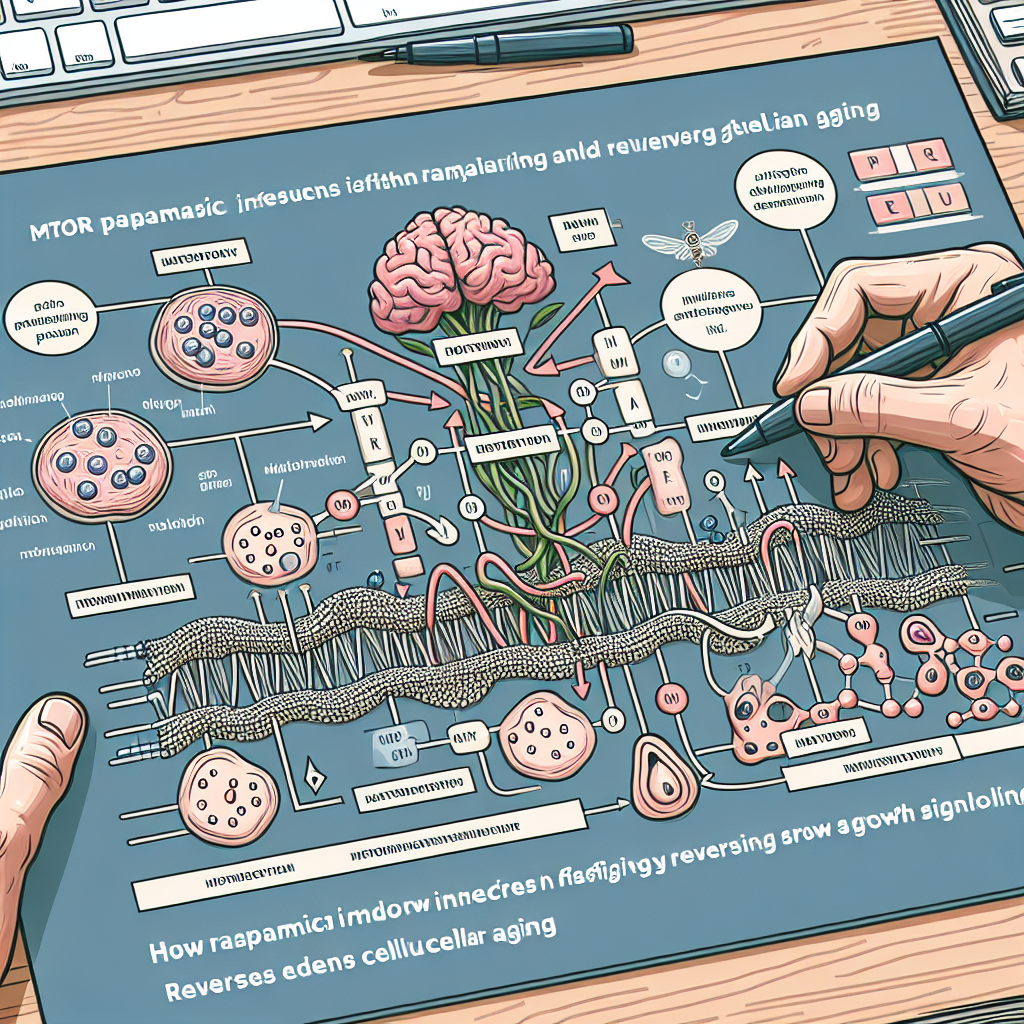
Rapamycin & mTOR: The Immunosuppressant Drug That Extends Lifespan by Blocking Aging’s Master Growth Switch
Rapamycin is a drug that seems too good to be true: it extends lifespan in every organism tested, from yeast to primates. It’s FDA-approved (as an immunosuppressant after organ transplants), inexpensive, and now researchers are exploring whether it could become the first pharmaceutical anti-aging drug.
But rapamycin is controversial. It suppresses immune function, which is useful after transplants but risky for longevity. Yet paradoxically, low-dose intermittent rapamycin appears to enhance immunity while extending lifespan—a combination that shouldn’t work but does in animal studies.
The mechanism: rapamycin inhibits mTOR, a cellular growth pathway that, while essential for some functions, drives accelerated aging when continuously active. By periodically suppressing mTOR with rapamycin, researchers are testing whether we can achieve the longevity benefits of caloric restriction pharmacologically—without actually restricting calories.
This article examines the science of rapamycin’s anti-aging effects, the risks and benefits, clinical evidence, and how it compares to other longevity interventions.
What Is Rapamycin? History & Mechanism
Discovery & Initial Uses
Rapamycin was discovered in 1975 in soil samples from Easter Island (Rapa Nui, hence the name). For decades, it was used solely as an immunosuppressant for organ transplant patients to prevent rejection.
It wasn’t until 2009 that researchers made the surprising discovery: low-dose rapamycin extends lifespan in elderly mice by approximately 9-14%. This sparked a flood of research into rapamycin as a potential anti-aging drug—and the field of “geroprotection” (aging-slowing pharmacology) was born.
How Rapamycin Works: mTOR Inhibition
Rapamycin works by inhibiting a protein complex called mTOR (mechanistic target of rapamycin). Think of mTOR as your cell’s “growth engine”—it senses nutrient availability and energy levels, then either accelerates growth and protein synthesis or switches to energy conservation mode.
In young people eating normally, mTOR is appropriately active, driving growth and tissue repair. But with aging and caloric abundance, mTOR becomes hyperactive, pushing cells toward accelerated aging, cancer risk, and metabolic dysfunction.
Rapamycin puts a brake on mTOR, mimicking the cellular state of caloric restriction—even when calories are abundant. This triggers downstream longevity pathways:
- Autophagy activation: Cells clean out dysfunctional components more aggressively
- Mitochondrial biogenesis: New, efficient mitochondria are produced
- Stress resistance: Cells activate protective pathways that improve survival during stress
- Inflammation reduction: Chronic low-grade inflammation (a key driver of aging) decreases
In essence, rapamycin tricks the body into the metabolic state of fasting—without requiring fasting.
The mTOR Pathway & Aging
mTOR’s Dual Role: Growth vs. Aging
This is the crucial paradox: mTOR is necessary for growth, muscle building, immune function, and healing. Completely blocking mTOR is harmful. Yet chronic mTOR hyperactivation drives accelerated aging.
The solution: periodic or low-dose mTOR inhibition, not complete suppression. This allows growth and recovery while preventing the chronic mTOR overactivation that accelerates aging.
Why mTOR Drives Aging
Several mechanisms:
- Suppression of autophagy: High mTOR prevents cells from cleaning out damaged material, causing accumulation of cellular garbage.
- Mitochondrial dysfunction: Chronic mTOR activation prevents mitochondrial renewal, leading to dysfunctional energy production.
- Accelerated senescence: Overactive mTOR drives cells toward senescence (a state of permanent dysfunction that contributes to aging).
- Cancer promotion: mTOR is one of the most commonly dysregulated pathways in cancer, suggesting chronic mTOR activation raises cancer risk.
Caloric restriction inhibits mTOR and extends lifespan dramatically. Rapamycin does the same pharmacologically, which is why researchers consider it a potential “caloric restriction mimetic.”
Rapamycin’s Dual Role: Benefits vs. Risks
Geroprotective Effects (Anti-Aging Benefits)
In animal models, rapamycin:
- Extends lifespan by 9-14% in mice (equivalent to 7-10 years in humans)
- Delays cancer onset
- Reduces neurodegeneration and improves cognitive function
- Improves cardiovascular function
- Enhances metabolic health
These effects are consistent across multiple organisms (yeast, flies, worms, mice, primates), suggesting they’re fundamental to aging biology.
Immunosuppression Concerns
At standard doses (used post-transplant), rapamycin powerfully suppresses immune function, increasing infection risk. This is desirable post-transplant (preventing rejection) but dangerous for longevity—infections are a major cause of aging-related death.
However, at the low doses being tested for anti-aging (0.5-1.0mg once or twice weekly), the immunosuppression is much less pronounced. Emerging data suggests that low-dose intermittent rapamycin may even enhance certain immune functions, particularly cellular immunity.
Metabolic Effects
Rapamycin can:
- Increase insulin resistance (concerning for metabolic health) at high doses
- Potentially increase fracture risk long-term (animal studies suggest bone effects)
- Affect lipid metabolism in inconsistent ways
Again, low-dose intermittent protocols appear to minimize these risks while preserving anti-aging benefits.
Clinical Trials Using Rapamycin for Longevity
The PEARL Trial
The PEARL trial (Personalized, Effective, Reasonable, Low-dose) is investigating low-dose intermittent rapamycin in aging adults. Early results are promising, showing improved immune function markers and favorable metabolic changes at doses of 0.5mg twice weekly.
Dosing Protocols for Anti-Aging
The doses being tested are far lower than transplant doses:
| Use | Typical Dose | Frequency | Mechanism |
|---|---|---|---|
| Post-transplant immunosuppression | 4-12mg daily | Daily | Strong immunosuppression |
| Cancer treatment (mTORC1 inhibitor) | 5-10mg daily | Daily | Direct mTOR inhibition |
| Anti-aging (experimental) | 0.5-1.0mg | Once or twice weekly | Periodic mTOR inhibition (mimics fasting) |
Key principle: Low-dose intermittent dosing preserves mTOR’s beneficial functions (growth, healing) while providing regular “resets” of mTOR-mediated aging. It’s less about total mTOR suppression and more about preventing chronic hyperactivation.
Off-Label Longevity Medicine
Currently, rapamycin is only FDA-approved as an immunosuppressant. Using it for anti-aging in healthy people is off-label. A small but growing number of longevity-focused physicians are now prescribing low-dose intermittent rapamycin to healthy patients interested in anti-aging—though this remains experimental and requires careful monitoring.
Rapamycin vs. Other Anti-Aging Interventions
Rapamycin vs. Metformin
Metformin activates AMPK and inhibits mTOR, similar to rapamycin. However:
- Rapamycin directly inhibits mTOR; metformin does so indirectly through AMPK.
- Metformin is safer and more widely studied in humans.
- Rapamycin may have stronger anti-aging effects in animal models, but human data is sparse.
Some longevity clinics combine both for synergistic mTOR inhibition, but this is highly experimental.
Rapamycin vs. Fasting
Fasting also inhibits mTOR and activates autophagy. Rapamycin achieves this pharmacologically without requiring fasting behavior. For people unable to fast (due to medical conditions, eating disorders, etc.), rapamycin could be an alternative. However, fasting is free and likely more powerful—fasting activates additional longevity pathways beyond just mTOR inhibition.
Rapamycin + Other Interventions: Synergy
Rapamycin can combine with:
- Fasting: May be synergistic (both inhibit mTOR)
- Exercise: Compatible; exercise still benefits those on low-dose rapamycin
- NAD+ boosters: May be complementary (both enhance cellular repair)
- Senolytic drugs: Combined mTOR inhibition + senescent cell clearance could be powerful
Rapalogs: Rapamycin Analogs & Future Directions
Researchers are developing “rapalogs”—modified versions of rapamycin with improved properties:
- Temsirolimus: A rapamycin derivative already approved for kidney cancer treatment, with potentially better safety profile.
- Everolimus: Another rapalog used for cancer and heart transplants.
- Next-generation compounds: Designed to target specific mTOR complexes (mTORC1 vs. mTORC2) for greater precision and fewer side effects.
These may eventually offer anti-aging benefits with superior safety profiles compared to rapamycin.
Who Might Benefit? Screening & Risk Assessment
Rapamycin for anti-aging is highly experimental. Potential candidates might include:
- People 60+ seeking to slow biological aging
- Those unable to maintain fasting or intensive exercise regimens
- Individuals with biological age markers significantly higher than chronological age
- Those with high genetic risk for age-related diseases
However, careful medical screening is essential:
- Kidney and liver function tests (rapamycin is metabolized by the liver)
- Immune function assessment (CD4 counts, T-cell function)
- Cardiovascular evaluation
- Baseline epigenetic age testing and plasma proteomics to measure whether rapamycin is actually reversing aging
Frequently Asked Questions
Q: Is rapamycin safe for healthy people?
A: At low intermittent doses (0.5-1.0mg weekly), early evidence is promising, but human trials are still limited. It’s safer than many pharmaceutical interventions but carries risks. Medical supervision is essential.
Q: How does rapamycin compare to other drugs like metformin?
A: Metformin is safer, better-studied in humans, and many people use it off-label for longevity. Rapamycin may be more potent but carries more risks. Most clinicians would recommend trying metformin + lifestyle first.
Q: Will I get sick more often on rapamycin?
A: Low-dose intermittent rapamycin appears to preserve or even enhance immunity in early trials, unlike high-dose transplant doses. However, this is still being studied.
Q: Can I combine rapamycin with metformin?
A: Some longevity clinics recommend this for synergistic mTOR inhibition, but this is experimental and requires careful medical management.
Q: How long before I see results?
A: Like metformin and fasting, rapamycin works at the cellular level. You won’t “feel different,” but biological age markers should improve over months to years if measured via epigenetic testing or plasma proteomics.
Q: Is rapamycin expensive?
A: Generic rapamycin is inexpensive (~$100-200 per month at low doses). Cost is not the barrier; medical supervision and risk assessment are.
Conclusion: Rapamycin as an Experimental Longevity Tool
Rapamycin is one of the most exciting compounds in aging research. It extends lifespan in every organism tested, and the mechanism—mTOR inhibition—is fundamental to aging biology. Low-dose intermittent protocols appear to preserve anti-aging benefits while minimizing immunosuppression risks.
However, unlike metformin (which has decades of human safety data), rapamycin for longevity is still experimental. The PEARL trial and other human studies should provide clarity in the coming years.
For now, rapamycin is worth considering for:
- People 60+ interested in experimental anti-aging approaches
- Those with high biological age markers who’ve failed conventional interventions
- Individuals willing to undergo careful medical monitoring and biological age testing
The combination of rapamycin + fasting + exercise + NAD+ boosters + senolytic drugs represents a comprehensive, science-based approach to aging. Whether rapamycin becomes a mainstream longevity tool depends on results from ongoing clinical trials.
References
- Blagosklonny, M. V. (2014). Rapamycin for longevity: opinion article. Aging, 6(1), 1-2.
- Johnson, S. C., et al. (2013). A closer look at mTOR inhibition in longevity. Nature Medicine, 19(9), 1100-1103.
- Peng, S. B., et al. (2010). Inhibition of mTOR signaling reduces tumor growth and spontaneous metastasis. Cancer Research, 70(2), 507-517.
- Wilkinson, J. E., et al. (2012). Rapamycin delays aging in mice. Aging Cell, 11(4), 675-682.
- Laplante, M., Sabatini, D. M. (2012). mTOR signaling in growth control and disease. Cell, 149(2), 274-293.
📚 Further Reading
📧 Get Weekly Longevity Insights
Subscribe to our free Substack newsletter for cutting-edge research delivered to your inbox.
Affiliate Disclosure: This article contains affiliate links. If you purchase through these links, we may earn a commission at no additional cost to you. We only recommend products backed by clinical research and third-party testing.
Medical Disclaimer: This content is for informational purposes only and does not constitute medical advice. Consult a healthcare provider before starting any new supplement regimen or medication, especially if you have existing health conditions or take prescription medications.