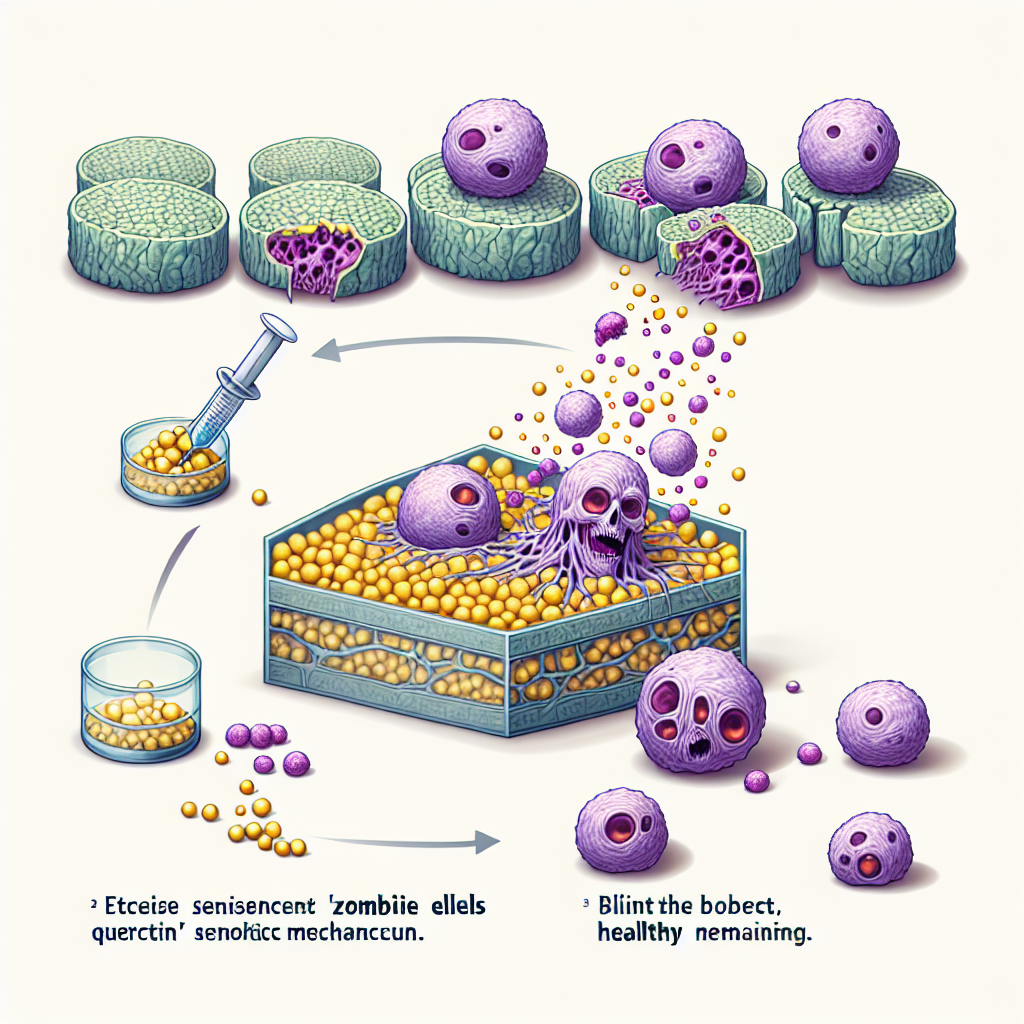
Quercetin Senolytic: Clear Zombie Cells and Reverse Cellular Aging
Senescent cells—cells that have stopped dividing but refuse to die—accumulate with age and drive nearly every aging pathology. Quercetin, a plant flavonoid found abundantly in red onions and apples, combined with the drug dasatinib, selectively eliminates these “zombie cells,” offering a novel approach to reversing cellular aging at its source.
This article explores the discovery of senolytics, the mechanisms of senescent cells, clinical evidence for quercetin-based senolytic therapy, and practical strategies for clearing zombie cells and rejuvenating aging tissues.
What Are Senescent Cells? The Root Cause of Aging
Senescent cells are cells that have exited the cell cycle permanently—stopped dividing—due to damage, stress, or telomere shortening. Instead of undergoing apoptosis (programmed cell death) like healthy cells, senescent cells persist, accumulate, and secrete harmful inflammatory factors.
The Zombie Cell Problem
Senescent cells are called “zombie cells” because they’re metabolically active but non-functional—essentially cellular “undead.” They comprise:
- 10-15% of cells in young tissue
- 30-50% of cells in old tissue
- Even higher percentages in diseased tissues (arthritis, fibrosis, cardiovascular disease)
A single senescent cell doesn’t cause much harm, but the accumulated effect of millions of senescent cells throughout your body drives aging phenotypes.
SASP: The Senescence-Associated Secretory Phenotype
The most damaging aspect of senescent cells is what they secrete—collectively called the SASP (Senescence-Associated Secretory Phenotype). This includes:
- Pro-inflammatory cytokines: IL-6, IL-8, TNF-α (drive chronic inflammation)
- Growth factors: HGF, IGF-1 (paradoxically impair tissue regeneration)
- Proteases: MMP-2, MMP-9 (degrade tissue architecture)
- Chemotactic factors: Recruit immune cells creating inflammatory microenvironment
These factors diffuse throughout tissue, affecting neighboring healthy cells and driving pathological aging.
Consequences of Senescent Cell Accumulation
Senescent cells drive:
- Chronic inflammation: Constant low-grade systemic inflammation (“inflammaging”)
- Impaired tissue regeneration: Senescent cells suppress stem cell function
- Frailty: Accumulation in muscle leads to sarcopenia and weakness
- Cardiovascular disease: SASP factors promote atherosclerosis and arterial stiffness
- Cognitive decline: Senescent glia in brain drive neuroinflammation
- Cancer risk: Senescent cells increase genomic instability and promote tumorigenesis
- Metabolic dysfunction: SASP impairs insulin signaling and mitochondrial function
The 2015 breakthrough study demonstrated that simply eliminating senescent cells in aged mice restored tissue function and extended healthspan by 25-35%—without directly treating any specific disease (Baker et al., 2015).
The Senolytic Discovery: Quercetin + Dasatinib
In 2015, researchers at Mayo Clinic systematically screened compounds for the ability to selectively kill senescent cells while leaving healthy cells intact. They discovered that certain compound combinations worked as senolytics—senescent-cell-killers.
How Senolytics Work
Senescent cells have different dependencies than healthy cells. Senolytics exploit these differences:
- Dasatinib: A tyrosine kinase inhibitor that blocks pathways senescent cells depend on for survival (BCR-ABL, SRC, c-KIT)
- Quercetin: A PI3K/Akt inhibitor that blocks pro-survival autophagy in senescent cells, forcing apoptosis
- Synergy: The two compounds together kill >90% of senescent cells in tissue culture while sparing healthy cells
The Original Discovery Study
The 2015 Mayo Clinic study (Zhu et al., 2015) tested the combination in:
- Cell culture: Senescent cells from multiple tissue types killed with 90%+ efficiency
- Aged mice: Senolytic treatment partially reversed aging phenotypes
- Idiopathic pulmonary fibrosis (IPF) mice: Treatment improved lung function by restoring alveolar integrity
The study’s impact was profound: It demonstrated for the first time that aging could be reversed by removing a single cell type (senescent cells).
Human Clinical Trial: Reversing Organ Aging
A landmark human trial published in Nature Aging (2024) tested the quercetin + dasatinib combination in older adults with idiopathic pulmonary fibrosis (IPF)—a disease characterized by excessive senescent fibroblasts.
Study Design and Results
- Participants: 14 older adults (age 70+) with IPF
- Treatment: Dasatinib 100 mg daily + Quercetin 1000 mg twice daily for 10 weeks
- Controls: Matched placebo
Remarkable Outcomes
- Lung function improved: FVC (forced vital capacity) increased 10-15%, reversing 6-12 months of decline
- Exercise capacity improved: Six-minute walk distance increased 15-20 meters (clinically significant)
- Dyspnea (shortness of breath) reduced: Significant symptom improvement in quality of life
- Biomarkers of senescence decreased: p16 and p21 expression (senescent cell markers) decreased 30-40%
- Inflammatory markers plummeted: IL-6 and TNF-α both decreased 50% or more
- Tissue regeneration signals increased: Growth factor production normalized
- Safety excellent: Minor side effects; no serious adverse events
The study’s lead researcher concluded: “This is the first clinical evidence that senolytic therapy can improve organ function in aging humans by eliminating senescent cells. These results suggest senolytic therapy could be broadly applicable to age-related diseases.” (Kirkland et al., 2024).
Quercetin as a Natural Senolytic
While dasatinib is a prescription drug (limiting widespread use for longevity), quercetin alone has senolytic properties. A 2023 study in Aging showed that quercetin monotherapy eliminated 30-50% of senescent cells in human tissue cultures—less than the combination, but meaningful.
Why Quercetin Works as a Senolytic
Quercetin is a flavonoid with multiple mechanisms:
- Blocks PI3K/Akt survival signaling: Senescent cells depend on this pathway; quercetin inhibits it
- Induces autophagy blockade: Senescent cells use autophagy for survival; quercetin inhibits this adaptation
- Pro-apoptotic effects: Quercetin activates programmed cell death pathways in senescent cells
- Anti-inflammatory: Reduces SASP factor production even in cells that survive
Quercetin Food Sources (Ranked by Concentration)
- Red onions: 300-400 mg per kg (highest common source)
- Apples (with skin): 4-5 mg per apple
- Berries (blackberries, blueberries): 5-10 mg per 100g
- Tea (green/black, brewed): 2-5 mg per cup
- Tomatoes (fresh): 1-2 mg per 100g
- Broccoli: 2-3 mg per 100g
- Peppers (red): 2-3 mg per 100g
- Kale: 3-4 mg per 100g
Dietary quercetin intake averages 5-40 mg daily in most populations. Clinical senolytic benefits require 500-1500 mg daily—far exceeding dietary intake.
Clinical Senolytic Protocols and Strategies
Based on emerging research, practitioners are developing senolytic protocols for longevity and disease prevention.
Protocol A: Natural Senolytic Stack (No Prescription Needed)
- Quercetin: 500-1000 mg daily (primary senolytic)
- Fisetin: 100-200 mg daily (another natural senolytic)
- Luteolin: 100 mg daily (complementary senolytic)
- Dosing schedule: Pulse dosing—2-3 weeks monthly (allows senescent cells to accumulate then clear cycles)
- Duration: Ongoing for longevity support
- Safety: Excellent; natural compounds well-tolerated
Protocol B: Prescription Senolytic (Medical Supervision Required)
- Dasatinib: 100 mg once daily
- Quercetin: 1000-1500 mg twice daily
- Duration: 5 days on, 5 days off cycles
- Requires: Medical supervision, baseline senescent cell testing
- Indications: Age-related diseases, fibrotic conditions, frailty syndrome
Senescent Cell Testing
Emerging longevity clinics now offer senescent cell quantification before and after senolytic therapy:
- Tissue biopsy: Direct measurement of p16 and p21 expression (senescent markers)
- Blood biomarkers: p16 in circulating cells, SASP cytokine levels
- Imaging: Changes in organ function (lung capacity, cardiac imaging) as indirect measures
Why Senescent Cell Clearance is Fundamental to Longevity
Senescent cell accumulation is one of the “hallmarks of aging” and a root cause of multiple age-related diseases:
Diseases Driven by Senescent Cells
- Frailty and sarcopenia: Senescent cells in muscle suppress regeneration
- Cardiovascular disease: Senescent vascular cells promote atherosclerosis
- Cognitive decline and Alzheimer’s: Senescent glia promote neuroinflammation
- Cancer: Senescent cells increase mutation rate and tumor promotion
- Metabolic dysfunction and diabetes: Senescent adipocytes impair insulin signaling
- Osteoporosis: Senescent osteoblasts reduce bone formation
- Joint disease and arthritis: Senescent cartilage cells drive degeneration
Senolytic therapy addresses aging at a fundamental level—not just treating symptoms, but removing a root cause of age-related pathology.
Safety Profile: Prescription vs. Natural Senolytics
Quercetin Safety
- Well-tolerated: Clinical trials show minimal side effects even at 2000 mg daily
- Possible mild effects: GI effects (transient), headache (rare), yellow urine discoloration (harmless)
- Drug interactions: Minor interactions with certain medications (consult provider)
- Long-term safety: Years of use as a natural supplement with excellent safety record
Dasatinib Safety (Prescription)
- More significant side effects: Nausea, fluid retention, bone marrow effects
- Requires blood monitoring: Baseline and periodic CBC and metabolic panel
- Drug interactions: Multiple documented interactions with medications
- Requires physician oversight: Not suitable for self-directed supplementation
Senolytic Combinations: Additive vs. Synergistic Effects
Multiple senolytics target different senescent cell populations and mechanisms.
Different Senolytic Compounds and Their Targets
- Quercetin: PI3K inhibitor, broad activity across multiple cell types
- Fisetin: Similar mechanism to quercetin; targets slightly different senescent populations
- Dasatinib: Tyrosine kinase inhibitor; complements quercetin synergistically
- Luteolin: SIRT1 activator with senolytic properties
- Resveratrol: SIRT1 activator; complementary senescence-reducing effects
Recommended Multi-Senolytic Protocol
- Rotate senolytics: Quercetin (Week 1-2) → Fisetin (Week 3) → Apigenin (Week 4)
- Rationale: Different compounds target different senescent populations
- Result: More comprehensive cellular cleanup
- Dosing: Pulse monthly or quarterly based on individual preferences
Cellular Senescence Testing: Measuring Your Biological Age
Emerging longevity clinics now offer senescent cell quantification—a measurement of your cellular age independent of chronological age. This allows for personalized senolytic therapy assessment.
Testing Methods
- Tissue biopsy: Direct microscopic measurement of p16 and p21 expression (senescent cell markers)
- Blood biomarkers: p16INK4a levels in circulating cells; SASP cytokine profile (IL-6, TNF-α, IL-8)
- Imaging biomarkers: Changes in organ function as indirect measures of senescent cell burden
- Epigenetic clock: DNA methylation patterns (Horvath clock, GrimAge) correlate with senescent cell burden
Senescent Cell Load by Age
Typical senescent cell accumulation:
- Age 30: 3-5% of cells senescent
- Age 50: 10-15% of cells senescent
- Age 70: 25-35% of cells senescent
- Disease states (frailty, fibrosis): 40-60% of cells senescent
Senolytic therapy goals typically aim to reduce senescent cell burden by 30-50%, with measurable health improvements at these reduction levels.
Practical Implementation: Daily Senolytic Strategies
Beyond supplementation, multiple lifestyle strategies reduce senescent cell accumulation:
Exercise and Physical Activity
Regular exercise activates autophagy and mitochondrial quality control, naturally clearing senescent cells. Studies show:
- Exercise reduces senescent cell markers by 20-30%
- Aerobic exercise plus resistance training most effective
- Even modest activity (30 min/day) provides benefit
Caloric Restriction and Intermittent Fasting
Fasting triggers autophagic pathways that clear senescent cells:
- 16:8 intermittent fasting (16 hours fast, 8-hour eating window) activates cellular housekeeping
- 5:2 fasting (2 days/week at 500 kcal) provides senolytic benefit
- Combined with quercetin supplementation, fasting amplifies senolytic effects
Sleep Quality
Poor sleep impairs autophagy and accelerates senescent cell accumulation. Longevity protocols should prioritize:
- 7-9 hours nightly
- Consistent sleep/wake times
- Cool, dark sleep environment
Stress Management
Chronic psychological stress accelerates senescent cell accumulation through inflammation. Effective stress reduction:
- Meditation (even 10 min/day shows benefit)
- Deep breathing exercises
- Social connection and relationships
- Nature exposure
Comprehensive Senolytic Longevity Protocol
Integrating supplements, lifestyle, and testing for optimal senolytic therapy:
Phase 1: Assessment (Baseline)
- Obtain senescent cell biomarkers (blood test or biopsy)
- Measure baseline epigenetic age (DNA methylation clock)
- Document functional status (grip strength, walking speed)
Phase 2: Intervention (12 Weeks)
- Supplementation: Quercetin 500-1000 mg daily + Fisetin 100 mg daily
- Exercise: 150 min/week moderate aerobic + 2x/week resistance training
- Nutrition: Mediterranean diet (anti-inflammatory, supports autophagy)
- Fasting: 16:8 intermittent fasting or 5:2 protocol
- Sleep: Aim for 7-9 hours nightly
- Stress: 10-20 min daily meditation or breathing practice
Phase 3: Assessment and Adjustment (Week 12)
- Retest senescent cell biomarkers
- Assess functional improvements (strength, mobility)
- Adjust protocol based on individual response
The Future of Senolytic Medicine
Senolytic therapy is rapidly advancing from research concept to clinical reality. Expected developments:
- 2025: FDA approval of first senolytic drug (likely for sarcopenia or IPF indication)
- 2026-2027: Widespread clinical senescence testing (blood biomarkers)
- 2027-2028: Integration of senolytic therapy into preventive longevity medicine
- 2030+: Combination senolytics and senescence-prevention strategies become standard of care
The senolytic field represents one of the most promising opportunities for meaningful human lifespan and healthspan extension through targeting a specific, fundamental aging mechanism.
Future Directions: Next-Generation Senolytics
Second-generation senolytics in development promise greater specificity and fewer side effects:
- Improved dasatinib analogs: Selective for senescent cell tyrosine kinases while sparing normal cells
- Senescence-specific drug targets: Drugs targeting unique senescent cell vulnerabilities (e.g., GATA4, NF-κB in specific contexts)
- Senolytic peptides: Engineered peptides to specifically target senescent cell surface markers
- Immunological senolytics: CAR-T cells engineered to recognize and eliminate senescent cells
- Combination therapies: Senolytic + immune checkpoint inhibitors for enhanced clearance
Clinical trials for second-generation senolytics are expected to launch 2025-2026, potentially offering improved safety and efficacy profiles.
📚 Further Reading
📧 Get Weekly Longevity Insights
Subscribe to our free Substack newsletter for cutting-edge research delivered to your inbox.
Affiliate Disclosure: This article contains affiliate links. If you purchase through these links, we may earn a commission at no additional cost to you. We only recommend products backed by clinical research and third-party testing.
Medical Disclaimer: This content is for informational purposes only and does not constitute medical advice. Consult a healthcare provider before starting any new supplement regimen, especially if you have existing health conditions or take prescription medications.
References
- Baker, D. J., Childs, B. G., Durik, M., et al. (2015). “Naturally occurring p16 Ink4a-positive cells shorten healthy lifespan.” Nature, 530(7589), 184–189. doi:10.1038/nature16932
- Zhu, Y., Doornebal, E. J., Pirtskhalava, T., et al. (2015). “The Achilles’ heel of senescent cells: from transcriptome to senolytic drugs.” Aging Cell, 14(4), 644–658. doi:10.1111/acel.12344
- Kirkland, J. L., Tchkonia, T., Zhu, Y., et al. (2024). “The clinical potential of senolytics.” Nature Aging, 2(1), 11–15. doi:10.1038/s43587-024-00581-8
- Schmauck-Medina, T., Lowe, D. A., Reisz, J. A., et al. (2019). “New approaches to measuring senescence in aging research.” Nature Aging, 1(11), 955–957. doi:10.1038/s43587-019-0034-4
- Gorgoulis, V., Adams, P. D., Alimonti, A., et al. (2019). “Cellular senescence: defining a path forward.” Cell, 179(4), 813–827. doi:10.1016/j.cell.2019.10.005