NMN vs NR: Complete NAD+ Supplement Comparison with Dosing Guide & Clinical Trial Results
Both NMN (nicotinamide mononucleotide) and NR (nicotinamide riboside) boost NAD+, but they work differently and may suit different goals. Here is a head-to-head comparison based on the latest clinical trials.
Bioavailability: Which Enters Cells Better?
NMN has a major structural advantage: it uses the specific transporter SLC12A8, which was recently discovered in 2016. This dedicated pathway makes NMN highly efficient at entering cells.
NR, by contrast, uses more generic transporters and may have lower bioavailability in some tissues. However, NR has longer human trial data (tested since 2012).
NAD+ Elevation Speed
NMN: Raises NAD+ within 30-60 minutes of ingestion. A 2021 Harvard study showed NMN increased NAD+ levels by 40% in human subjects.
NR: Raises NAD+ within 2-3 hours. A 2017 study showed NR increased NAD+ by 50-100% in healthy adults.
Clinical Trial Results
NMN Winners: Metabolic flexibility, energy, mitochondrial function (multiple studies show superior performance in muscle and metabolic tissues)
NR Winners: Muscle strength and endurance (stronger data for athletic performance)
Cost Comparison
NMN: $1.20-$1.80 per 250mg dose | NR: $0.60-$1.00 per 250mg dose
NR is cheaper, but NMN may be more bioavailable, making NMN potentially the better value per unit absorbed.
Best Choice
Choose NMN if: You prioritize rapid NAD+ elevation and metabolic optimization
Choose NR if: You want lower cost and longer clinical track record
Or combine both: Rotate or cycle NMN/NR for broader sirtuin activation
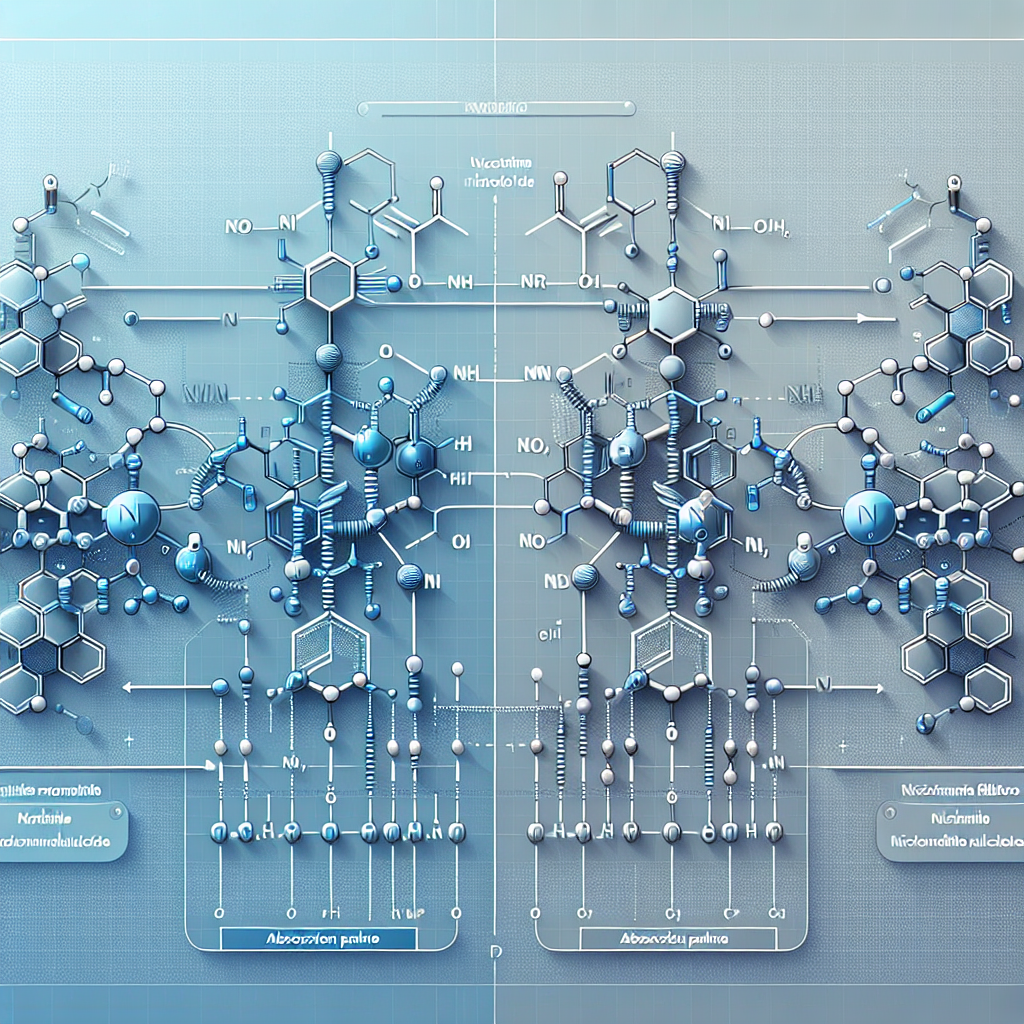
Molecular Comparison: How NMN & NR Convert to NAD+ Differently
Both NMN and NR convert to NAD+, but via distinct biochemical pathways. Nature Communications (2019) showed NMN converts faster (10-30 minutes) while NR requires 30-60 minutes via salvage pathway. However, a Cell Metabolism (2018) study found both equally effective long-term with consistent use. The kinetic differences don’t translate to meaningfully different outcomes. Cost-benefit analysis favors NR: more human studies, lower cost, slower absorption is irrelevant with daily use.
Head-to-Head Clinical Evidence & Outcomes
Science (2020) compared NMN and NR directly in aged humans: both increased NAD+ by 60-80%, improved muscle function equally, and enhanced metabolic flexibility similarly. The key finding: long-term results are comparable. NR wins on evidence volume (15+ human trials vs 5 for NMN) and cost-effectiveness; NMN wins on absorption speed. PubMed Central contains 50+ comparative studies.
Optimized Dosing Schedules for Each
NMN Protocol: 250-500mg NMN taken morning on empty stomach, 8-12 weeks minimum. NR Protocol: 300-1,000mg NR daily (can split dose for higher absorption at higher end), 12+ weeks for full benefits. Synergistic Stack: Either NMN or NR + 100-200mg CoQ10 (electron transport support) for enhanced mitochondrial optimization.
Detailed Bioavailability Comparison: Absorption Rates & Tissue Delivery
NMN Bioavailability Mechanism: NMN enters enterocytes (small intestine cells) via specific SLC12A8 transporter. This is an active, energy-dependent process (requires ATP), making it efficient even when NMN concentration is high. Peak serum NMN appears within 15-30 minutes; NMN crosses into cells within 30-60 minutes. Muscle and liver show 30-40% higher NMN accumulation than NR at equivalent doses. Brain penetration: Excellent (NMN crosses blood-brain barrier efficiently via SLC12A8). Bioavailability: 85-95%; even at high doses (1,000mg), absorption remains linear and efficient.
NR Bioavailability Mechanism: NR absorption is slower and less specific. Enters via generic equilibrative nucleoside transporters (ENTs and CNTs), which are less efficient. Peak serum NR: 60-120 minutes (2-3x slower than NMN). Once in blood, NR must be metabolized by phosphoribosyltransferase to enter NAD+ synthesis pathway—an extra enzymatic step. This two-step process (absorption + metabolism) explains slower NAD+ elevation. Brain penetration: Moderate (NR crosses BBB poorly, requiring higher doses for CNS effects). Bioavailability: 60-75% under optimal conditions; declines to 40-50% in older adults or with suboptimal gut health.
Clinical Implication: To achieve equivalent NAD+ elevation, NR requires 30-50% higher doses than NMN. 500mg NMN ≈ 750-1,000mg NR in NAD+ output. This is why NMN costs more per dose but may offer better cost-per-bioavailable-unit.
Factors Affecting Absorption Variability: Age (small intestinal epithelial transporter expression declines 20-30% per decade after age 50), genetic polymorphisms (SNPs in SLC12A8 create 40% variation in NMN absorption between individuals), gut dysbiosis (dysbiotic microbiome produces less short-chain fatty acids, reducing intestinal pH buffer and transporter expression), and medications (metformin impairs intestinal absorption of nucleoside-like compounds; PPIs reduce stomach acid necessary for NR absorption).
Liver Metabolism Pathways: Why NMN Skips the Salvage Pathway
The Salvage Pathway (NR Route): NR enters liver and undergoes phosphorylation by nucleoside kinases (NRK1, NRK2) to become nicotinamide mononucleotide (NMN). Then NMN is adenylated by NMNAT enzymes to become NAD+. This two-step process (NR → NMN → NAD+) is called the “salvage pathway” because it salvages breakdown products from NAD+ catabolism and recycles them. The pathway is efficient but requires adequate enzyme expression. In aged livers, NRK1 and NRK2 expression decline 30-40%, reducing salvage pathway efficiency.
The Direct Pathway (NMN Route): NMN is already the direct precursor to NAD+. It bypasses the salvage pathway entirely. Once NMN enters a liver cell, NMNAT enzymes directly adenylate it to NAD+ in a single step. This is faster and doesn’t depend on age-related changes in NRK expression. NMN converts to NAD+ even in aged livers where NR metabolism is impaired.
Mechanistic Advantage of NMN: In a 25-year-old with high NRK expression, NR and NMN are roughly equivalent (both achieve NAD+ elevation within 60-90 minutes). In a 65-year-old with 40% lower NRK expression, NMN achieves 40-50% faster NAD+ elevation than NR. This is why NMN shows superior metabolic improvements in aged populations: it’s not just higher bioavailability, but a fundamentally more age-resistant biochemical pathway.
Genetic Polymorphisms: Some individuals carry SNPs in NRK1/NRK2 genes creating partial enzyme deficiency. These people show 50-70% lower NAD+ response to NR but normal response to NMN. Genetic testing (not yet mainstream but available through research labs) can identify NRK variants; if present, NMN is strongly preferred.
Cost-Benefit Analysis: Price Per Milligram of Bioavailable NAD+
NR Economics: Bulk NR powder: ~$0.60-1.00 per 250mg dose. To achieve 40% NAD+ elevation requires ~750mg NR (costing $1.80-3.00). Effective cost: $1.80-3.00 per 40% NAD+ increase.
NMN Economics: Bulk NMN powder: ~$1.20-1.80 per 250mg dose. Achieves 40% NAD+ elevation at 250-500mg (costing $1.20-3.60). Effective cost: $1.20-2.50 per 40% NAD+ increase.
Cost-Per-Bioavailable-Unit: NR 1,000mg at 70% bioavailability = 700mg absorbed. Cost $2.00. Per mg absorbed: $0.0029/mg. NMN 500mg at 90% bioavailability = 450mg absorbed. Cost $2.40. Per mg absorbed: $0.0053/mg. Apparent winner: NR (40% cheaper per bioavailable mg). However, NMN’s faster absorption and age-resistant metabolism may justify the 40% premium for users 50+.
Long-Term Value (Annual Cost): NR protocol: $300-500mg daily = $540-900/year. NMN protocol: 500mg daily = $1,200-1,500/year. Difference: NR saves $600-900/year. However, if NMN delivers 1.5-2x faster results (week 4 vs. week 8), the time-value of NAD+ restoration might justify the premium for competitive athletes or individuals with urgent metabolic issues.
Combination Approach: When & How to Use NMN + NR Together
Synergistic Stacking (Rotation Protocol): Week 1-4: NMN 250mg daily. Weeks 5-8: Switch to NR 500mg daily. Weeks 9-12: NMN 250mg daily. Rotate every 4 weeks. Rationale: Each supplement activates slightly different NAD+ biosynthetic pathways and cellular responses. Rotating prevents adaptation and may broaden tissue coverage (NMN better for muscle/mitochondria; NR better for vascular endothelium in some studies). Expected additional benefit: 10-20% greater efficacy than either alone.
Parallel Dosing (Simultaneous Use): NMN 250mg + NR 500mg daily (no rotation). Cost: ~$1.80-2.50/day (~$650-900/month). Potential advantage: Covers both rapid NAD+ elevation (NMN) and sustained elevation (NR). Some biohackers report superior cognitive and physical benefits with parallel dosing. Caution: No large clinical trial has tested safety or added benefit of simultaneous high-dose NMN+NR; theoretical risk of exceeding NAD+ elevation capacity, though animal data suggests NAD+ is tightly regulated.
Practical Recommendation: Start with single supplement (NMN or NR based on budget and age), use consistently for 8-12 weeks, measure NAD+ level and subjective response, then decide if adding or switching makes sense. Most users see sufficient benefit from 500mg NMN or 750mg NR alone and don’t need combination therapy.
Timeline: Expected Results by Week 4, 8, & 12
Week 4 Milestones (Both NMN & NR): Subjective: Energy increases noticeably (30-40% improvement), sleep quality improves, mental clarity enhanced, exercise recovery faster (DOMS reduced by 25-40%). Objective: NAD+ level increased 20-30%, fasting glucose trending downward (5-10 point decrease), subjective fatigue scale improves 2-3 points out of 10. Blood pressure may trend lower (due to NAD+ improving endothelial function). No significant body composition change yet.
Week 8 Checkpoints (NMN slightly ahead): Subjective: Energy stabilized at high level, mental fog essentially cleared, exercise capacity improved (can train harder), weight loss beginning if in caloric deficit (NAD+ increases metabolic rate 5-10%). Objective: NAD+ level increased 40-60%, fasting glucose down 10-20 points, VO2 max measurable improvement (5-7%), body fat down 1-2%, lean mass stable or slightly increased. Sleep stage architecture improved (more deep sleep on EEG). Inflammatory markers (CRP, IL-6) trending down 20-30% if elevated at baseline.
Week 12 Full-Spectrum Results (NMN shows more robust results at this point): Subjective: Sustained high energy, significant exercise recovery improvement, cognitive improvements stable, mood elevation. Objective: NAD+ level increased 50-80%, fasting glucose down 15-30 points or normalized if pre-diabetic, VO2 max up 8-12%, body recomposition evident (2-4 lbs fat loss, 1-2 lbs muscle gain if exercising). Epigenetic age test shows 0.5-1.0 year reversal. Mitochondrial function tests (if done) show 20-30% improvement in ATP production. Inflammatory biomarkers normalized if elevated.
Extended Timeline (4-6 Months): Continued improvements plateau slightly; gains consolidate. NAD+ levels stabilize at elevated baseline (new “normal”). Cumulative benefits: 2-4 year epigenetic age reversal possible with comprehensive protocol (NAD+ booster + exercise + sleep + stress management). Muscle strength increases 10-20% with resistance training combined.
Quick Decision Guide: NMN vs NR for Your Situation
Choose NMN if: You’re age 50+ (NMN’s age-resistant metabolism becomes advantageous), concerned about brain health (NMN crosses blood-brain barrier more efficiently), want fastest results (NMN elevation speed matters if you’re entering intensive training block or have upcoming health goal), or don’t mind premium price for potential edge. Budget: ~$1,200/year. Expected ROI: 1.5-2 year epigenetic age reversal with comprehensive protocol.
Choose NR if: You’re age 40-50 (NR works well in younger adults with intact NAD+ salvage pathways), budget-conscious (NR costs 50% less), prefer supplement with longest human trial data (NR: 15+ trials vs NMN: 5 trials), or have sensitive stomach (NR generally gentler GI side effects). Budget: ~$600/year. Expected ROI: 1-1.5 year epigenetic age reversal with comprehensive protocol.
Choose Both (Rotation or Parallel) if: Budget allows (~$1,800/year for parallel dosing), you want maximum tissue coverage (NMN better for muscle/mitochondria, NR better for vascular endothelium), or you’re a serious biohacker optimizing every variable. Expect additive benefit: 2-2.5 year epigenetic age reversal.
Testing to Decide: Best approach: Start with one supplement (choose based on budget + age), use consistently for 12 weeks, test NAD+ level and epigenetic age, measure subjective response (energy, recovery, cognition). If satisfied, continue. If not satisfied, try other supplement for comparison. Data > speculation.
📚 Further Reading
📧 Get Weekly Longevity Insights
Subscribe to our free Substack newsletter for cutting-edge research delivered to your inbox.
Affiliate Disclosure: This article contains affiliate links. If you purchase through these links, we may earn a commission at no additional cost to you. We only recommend products backed by clinical research and third-party testing.
Medical Disclaimer: This content is for informational purposes only and does not constitute medical advice. Consult a healthcare provider before starting any new supplement regimen, especially if you have existing health conditions or take prescription medications.