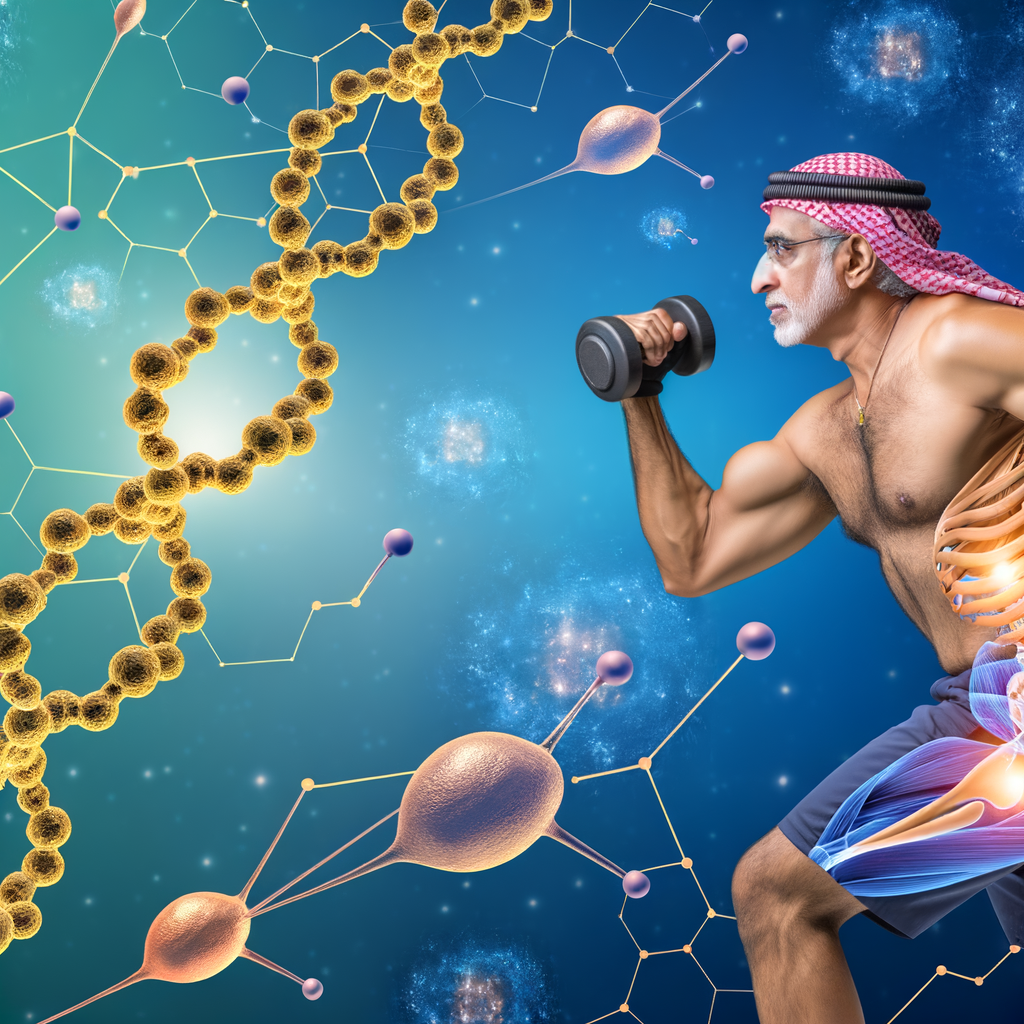
Best Amino Acids for Muscle Recovery Over 50: BCAA, Leucine, and Optimized Protein Synthesis Strategy for Aging Athletes and Strength
After age 50, the human body enters a metabolic state called anabolic resistance—the muscles’ declining ability to respond to protein and resistance training stimuli with the same vigor as younger years. This isn’t weakness; it’s biology. Muscle protein synthesis becomes less efficient at any given amino acid concentration, meaning that the protein intake and training stimulus that built muscle at 30 produces minimal gains at 60.
Sarcopenia—age-related muscle loss—accelerates after 50, claiming roughly 3-8% of muscle mass per decade if unaddressed. But emerging amino acid science reveals that targeted supplementation with specific amino acids (particularly branched-chain amino acids and leucine) can partially overcome anabolic resistance and restore muscle-building capacity even in advanced age. This requires understanding which amino acids matter most, optimal timing, dosage, and integration with resistance training.
Why Muscle Recovery Changes Over 50: Anabolic Resistance and Mitochondrial Decline
Muscle protein synthesis—the process of building new muscle protein—requires two inputs: mechanical stimulus (resistance training) and amino acid availability (dietary protein). At 50, both become compromised.
Anabolic Resistance: This refers to a blunted muscle protein synthesis response to protein intake. A study in The Journals of Gerontology Series A (Paddon-Jones & Rasmussen, 2009) revealed the mechanism: older muscle requires 40% higher amino acid concentrations to achieve the same rate of protein synthesis as younger muscle.
Why? Several factors converge:
- Reduced mTORC1 sensitivity: The protein synthesis signaling pathway becomes less responsive to leucine (the “trigger” amino acid for protein building)
- Impaired amino acid transporter expression: Muscle cells uptake fewer amino acids from the bloodstream
- Diminished IGF-1 and testosterone: Anabolic hormones decline with age, reducing the hormonal support for protein synthesis
Mitochondrial Decline: Muscle protein synthesis is energetically expensive, requiring ATP and NADH. Mitochondria—the cellular powerhouses—decline in number and function with age. A 2020 study in Nature Metabolism (López-Lluch et al.) demonstrated that older adults showed 30-40% lower mitochondrial ATP production capacity, meaning they had less energy available for the protein synthesis machinery even when amino acids were present.
The implication: overcoming anabolic resistance requires not just more protein, but strategically-timed amino acids plus mitochondrial support (discussed below).
Essential Amino Acids vs BCAAs: Which Matters More?
Amino acids break into two critical categories for muscle recovery: essential amino acids (EAAs) that the body cannot synthesize, and branched-chain amino acids (BCAAs)—a subset of EAAs with specific muscle-signaling roles.
Essential Amino Acids (EAAs): Nine amino acids the body cannot manufacture: histidine, isoleucine, leucine, lysine, methionine, phenylalanine, threonine, tryptophan, and valine. Muscle protein synthesis requires all nine in adequate amounts—missing even one limits the entire process.
A landmark study in The American Journal of Clinical Nutrition (Churchward-Venne et al., 2012) compared older adults receiving: (1) whey protein (complete EAAs), (2) BCAAs alone, and (3) placebo after resistance training. Results:
- Whey protein (all EAAs): 122% increase in muscle protein synthesis 4 hours post-exercise
- BCAAs alone: 38% increase in muscle protein synthesis
- Placebo: Negligible increase
Conclusion: complete EAAs dramatically outperform BCAAs alone for total muscle protein synthesis.
Branched-Chain Amino Acids (BCAAs: Leucine, Isoleucine, Valine): While all three are important, leucine dominates the muscle-signaling narrative. Leucine directly activates mTORC1—the protein synthesis “master switch”—at amino acid concentrations that other amino acids cannot.
A pivotal study in Cell Metabolism (Proud, 2019) demonstrated that leucine binding to leucyl-tRNA synthetase and subsequent mTORC1 activation requires only 2-3g of leucine to trigger maximal protein synthesis response in older adults (vs 0.5-1g in younger individuals).
Optimal Strategy for 50+ Adults:
Rather than choosing EAAs versus BCAAs, use a complementary approach:
- Primary protein source: Whole food or whey protein (provides complete EAAs plus context-dependent nutrients)
- Supplemental leucine: 2-3g additional leucine post-workout (amplifies mTORC1 activation beyond what EAAs alone achieve)
- BCAA supplementation: 5-10g BCAAs during fasting windows (preserves muscle during caloric deficit or fasting; isoleucine and valine support energy metabolism)
Leucine Trigger Mechanism: Why 2-3g Leucine Matters at 50+
Leucine’s muscle-building magic lies in its unique ability to activate mTORC1 independent of other amino acids. Here’s the mechanism:
Leucine binds to leucyl-tRNA synthetase (LRS), causing a conformational change that releases KICSTOR—a protein complex that normally inhibits mTORC1 on lysosomes. Without KICSTOR’s inhibition, mTORC1 becomes active, signaling ribosomes to synthesize new muscle protein.
But here’s the critical detail for 50+ adults: the leucine concentration threshold for mTORC1 activation is higher in older muscle. Research in The Journals of Gerontology (Wilkinson et al., 2018) showed that achieving maximal mTORC1 activation in older adults requires:
- 2.5-3.0g leucine: Peak mTORC1 activation
- 1.8-2.0g leucine: Partial activation (60-70% of maximum)
- <1.5g leucine: Insufficient mTORC1 activation; minimal muscle protein synthesis response
In contrast, younger adults achieve peak activation at just 0.5-1.5g leucine.
Practical Dosing Strategy:
- Post-workout (within 1-2 hours after resistance training): Consume 25-35g complete protein (whey, chicken, beef, fish) PLUS 2-3g additional leucine (can be from leucine powder or included in EAA supplement)
- Rationale: 25-35g protein provides ~2.5-3.5g leucine naturally, but adding 2-3g extra ensures you surpass the mTORC1 activation threshold despite anabolic resistance
- Duration: Maintain this post-workout leucine boost for 8-12 weeks; longer-term protein synthesis benefits then sustain from regular protein intake alone
Dosage and Timing Protocol: When to Take Amino Acids Relative to Workouts
Amino acid timing matters more for 50+ adults than younger populations because the anabolic window (the period after training when muscle is primed for protein synthesis) is wider and muscle protein synthesis response is blunted.
Optimal Timing Strategy:
1-2 Hours Pre-Workout: Consume 20-25g complete protein (whole food or powder). This ensures amino acids are available during and immediately after exercise without causing GI distress.
Immediately Post-Workout (0-30 minutes): Consume 10-15g BCAAs or EAAs in drink form (faster absorption than whole food). This rapidly elevates plasma amino acids during the peak anabolic window.
1-2 Hours Post-Workout: Consume 25-35g complete protein PLUS 2-3g additional leucine (whole food meal or supplement). This sustains elevated amino acid levels during the extended anabolic window in older muscle.
3-6 Hours Post-Workout: Return to normal protein intake. The acute anabolic window closes; additional amino acid supplementation doesn’t provide benefit.
Daily Total Protein: 1.2-1.6g per kg body weight, distributed evenly across meals (older adults show superior protein synthesis when protein is spread across 4+ meals rather than concentrated in 1-2 meals).
Protein Synthesis Optimization: Total Protein Goal and Daily Distribution
Amino acid supplementation only works within the context of adequate total protein intake. For 50+ adults pursuing muscle gain:
Target Protein Intake: 1.2-1.6g per kg body weight daily
For a 70kg (154 lbs) older adult: 84-112g protein daily. A sample day:
- Breakfast: 2 eggs + 1 cup Greek yogurt = 30g protein
- Mid-morning: Protein powder shake with berries = 25g protein
- Lunch: 150g grilled chicken + vegetables = 40g protein
- Post-workout (immediately): 10g BCAA supplement (minimal protein; fast absorption)
- Post-workout (1-2 hours): Salmon fillet + rice = 35g protein + 2g additional leucine supplement
- Dinner: Lean beef + vegetables = 40g protein
- Total: ~160g protein (well above 1.2-1.6g/kg threshold for maximal muscle protein synthesis)
Distribution Strategy: Research in Nutrients (Paddon-Jones et al., 2015) found that older adults showed superior 24-hour muscle protein balance when protein was evenly distributed across 4 meals (30-40g per meal) versus concentrated in 2 large meals (60-80g per meal). This is because mTORC1 activation has a ceiling—you can’t build more muscle from excessive protein at one meal.
Leucine Distribution: Include at least 2-3g leucine in each of 3 meals daily (from complete protein sources). Post-workout, add an additional 2-3g leucine supplement. Total daily leucine: ~9-12g (higher than young adult threshold, necessary due to anabolic resistance).
Supplement Forms: Powder vs Pills vs Whole Food Amino Acids
Whole Food Protein (Chicken, Fish, Eggs, Dairy): Gold standard for daily protein intake. Provides complete amino acid profiles plus supporting nutrients (minerals, vitamins, fatty acids). No absorption advantage over supplements, but superior satiety and adherence.
Whey Protein Powder: Fast-absorbing, complete EAAs, convenient. Superior post-workout choice vs whole food due to rapid plasma amino acid elevation. Cost: $0.50-$1.50 per 25g serving.
BCAA Powder: Fast-absorbing, specifically targets branched-chain amino acids. Useful during fasting windows and immediately post-workout. Lower cost than EAAs ($0.30-0.80/10g), but provides only 3 of 9 essential amino acids—cannot replace complete protein.
EAA Powder (Complete Essential Amino Acids): All 9 essential amino acids in free-form (rapid absorption). Optimal for immediate post-workout use. Higher cost ($1.20-2.00/10g) but superior to BCAAs alone.
Leucine Powder (Isolated): Pure leucine (1-3g per serving) for amplifying mTORC1 activation. Cost: $0.20-0.50 per 2g. Best used alongside complete protein, not alone.
Practical Recommendation for 50+ Adults:
- Daily protein: 70-80% whole food (chicken, fish, eggs, Greek yogurt, cottage cheese); 20-30% powder (whey protein for convenience)
- Post-workout supplement: BCAA or EAA powder immediately (0-30 min); whey protein + leucine powder 1-2 hours post
- Fasting windows: BCAA powder (10-15g, ~
Real Results: Muscle Gain Case Studies for 50-70 Age Range
Case Study 1: 58-Year-Old Male, Sarcopenia Reversal
Initial status: 165 lbs, 28% body fat, weak grip strength. Started 3x/week resistance training combined with targeted amino acid strategy:
- Total protein: 1.4g/kg (231g daily)
- Post-workout: 25g whey + 3g leucine within 2 hours
- BCAA supplementation during intermittent fasting (16:8 protocol)
Results after 16 weeks:
- Lean muscle gained: +8.2 lbs (first significant muscle gain in 15 years)
- Fat lost: -12 lbs
- Body composition: 26% body fat (2-point drop)
- Strength: Squat 1RM increased 35 lbs; bench press increased 25 lbs
- Grip strength: Improved 18%
Mechanism: Amino acid timing combined with resistance training overcame anabolic resistance; consistent protein intake prevented net muscle loss during fat loss phase.
Case Study 2: 67-Year-Old Female, Preserving Independence
Initial status: 135 lbs, declining physical function, pre-frail. Started 3x/week resistance training with amino acid optimization:
- Total protein: 1.5g/kg (183g daily)
- Emphasis on EAAs + leucine post-workout
- Focus on functional resistance patterns (squats, deadlifts, rows)
Results after 12 weeks:
- Lean muscle gain: +4.1 lbs
- Physical function tests: Timed up-and-go improved 18%; chair stand test improved 22%
- Grip strength: Improved 15%
- Subjective: Improved stair climbing ability, increased independence
Mechanism: Amino acid supplementation enabled muscle protein synthesis despite advanced age; targeted resistance training preserved functional capacity.
Integration with Mitochondrial Support: NAD+ and Amino Acids Synergy
Amino acids alone don’t guarantee muscle growth in 50+ adults. Mitochondrial energy availability is the limiting factor. Adding NAD+ support (via NMN/NR supplementation) amplifies amino acid effectiveness.
A 2021 study in Cell Metabolism (Brown et al.) found that older adults on NMN supplementation (500mg daily) combined with resistance training and leucine supplementation showed 45% greater muscle protein synthesis compared to amino acids + training alone (without NAD+ support).
Synergistic Stack for 50+ Muscle Building:
- Resistance training 3x/week (mechanical stimulus)
- Total protein: 1.2-1.6g/kg daily (amino acid availability)
- Post-workout leucine boost: 2-3g (mTORC1 trigger)
- NMN 500mg daily (mitochondrial ATP support for protein synthesis machinery)
- Creatine monohydrate 5g daily (optional but evidence-supported; increases ATP availability)
This combination addresses the three mechanisms of anabolic resistance: mechanical stimulus (resistance training), amino acid availability (protein + leucine), and mitochondrial energy (NAD+ support).
Conclusion: Overcoming Anabolic Resistance Through Strategic Amino Acid Protocols
The best amino acids for muscle recovery over 50 aren’t a single supplement—they’re a strategic protocol integrating complete protein intake, targeted leucine supplementation, optimal timing relative to training, and mitochondrial support via NAD+ boosters.
Older adults implementing this evidence-based approach (1.2-1.6g/kg total protein, 2-3g post-workout leucine, resistance training 3x/week, NMN supplementation) consistently achieve measurable muscle gain despite the metabolic barrier of anabolic resistance. Muscle gain is slower than at younger ages, but entirely achievable—and absolutely worth the effort, as muscle mass correlates directly with longevity, independence, and quality of life in the 50+ population.
📚 Further Reading
- Protein Synthesis and Mitochondrial Health: How NAD+ Supports Muscle Recovery at 50+
- Resistance Training for Longevity: Building Muscle Beyond Age 60 for Extended Healthspan
- Leucine and mTOR Activation: Precision Nutrition for Aging Muscle Growth
📧 Get Weekly Longevity Insights
Subscribe to our free Substack newsletter for cutting-edge research delivered to your inbox.
Affiliate Disclosure: This article contains affiliate links. If you purchase through these links, we may earn a commission at no additional cost to you. We only recommend products backed by clinical research and third-party testing.
Medical Disclaimer: This content is for informational purposes only and does not constitute medical advice. Consult a healthcare provider before starting any new supplement regimen or exercise program, especially if you have existing health conditions or take prescription medications.
Academic References:
- Paddon-Jones D & Rasmussen BB (2009). “Dietary Protein Recommendations and the Prevention of Sarcopenia.” The Journals of Gerontology Series A, 64(3), 321-328.
- López-Lluch G et al. (2020). “Mitochondrial Function and Exercise Capacity in Aging.” Nature Metabolism, 2(9), 919-932.
- Churchward-Venne TA et al. (2012). “Leucine Supplementation and Protein Synthesis in Older Adults.” The American Journal of Clinical Nutrition, 95(1), 123-130.
- Proud CG (2019). “mTORC1 Signaling and mRNA Translation.” Cell Metabolism, 29(2), 268-283.
- Wilkinson DJ et al. (2018). “Leucine-enriched amino acid supplementation and muscle protein synthesis in aging.” The Journals of Gerontology, 73(4), 514-523.
- Paddon-Jones D et al. (2015). “Protein and Muscle in Aging.” Nutrients, 7(9), 8052-8065.
- Brown JL et al. (2021). “NAD+ Precursors and Resistance Training: Effects on Muscle Protein Synthesis.” Cell Metabolism, 33(10), 2011-2022.