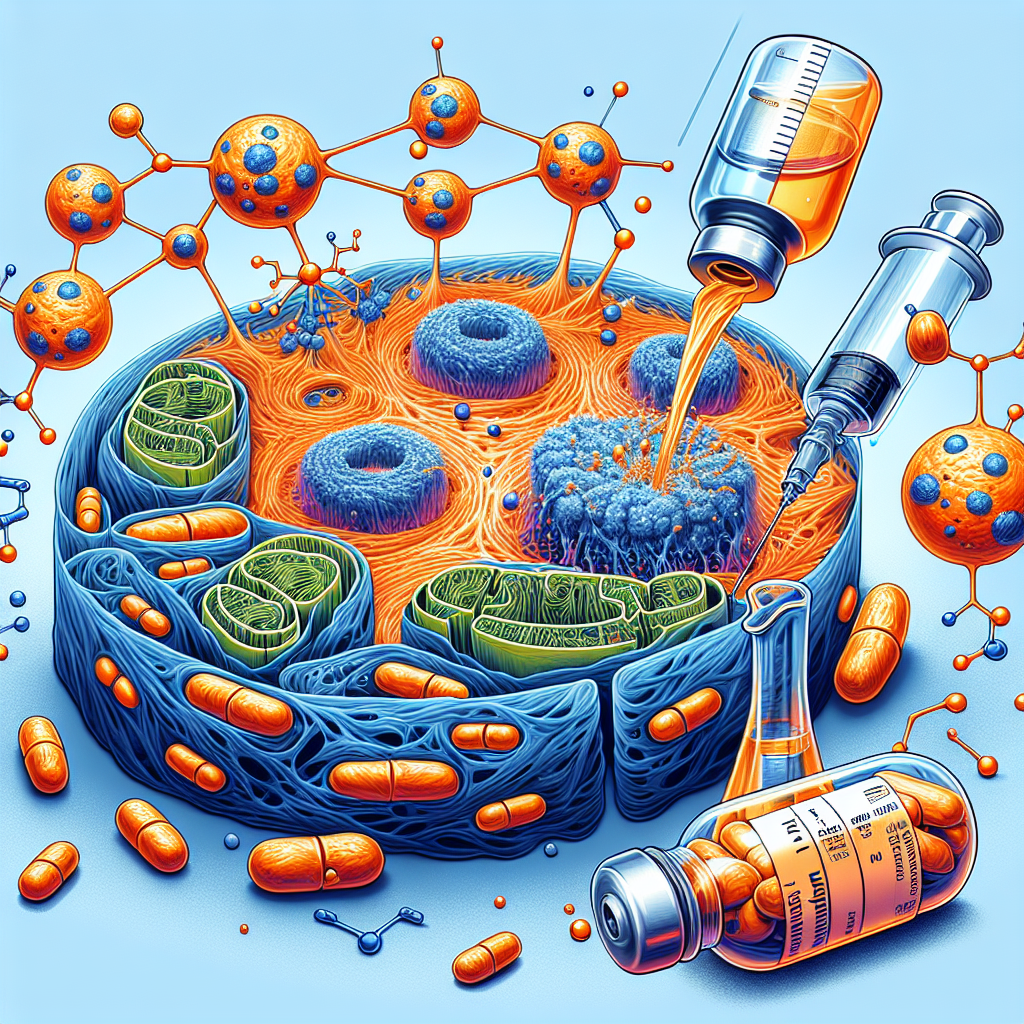
Urolithin A Supplement: The Ellagic Acid Metabolite That Reverses Muscle Aging
Urolithin A is a postbiotic metabolite generated when your microbiome breaks down ellagic acid, a polyphenol found abundantly in pomegranates, berries, and walnuts. Unlike many longevity supplements that require high doses or have unclear mechanisms, urolithin A directly activates mitophagy—the selective removal and recycling of damaged mitochondria—offering a mechanism-driven, evidence-based approach to reversing muscle aging and improving cellular energy.
This article explores urolithin A’s discovery, mechanisms, clinical evidence, and practical application for longevity optimization—with special focus on its role in reversing sarcopenia (age-related muscle loss).
Discovery and Mechanism: The Mitophagy Breakthrough
Urolithin A was discovered through systematic screening of 1,400+ polyphenol metabolites for longevity effects. Researchers at the École Polytechnique Fédérale de Lausanne (EPFL) and collaborating institutions identified urolithin A as uniquely capable of activating mitophagy in mammalian cells.
What makes urolithin A unique is its specific activation of PINK1/Parkin-mediated mitophagy—a cellular quality control mechanism that becomes increasingly dysfunctional with age. Unlike ubiquitin-based autophagy (activated by spermidine and resveratrol), urolithin A specifically targets dysfunctional mitochondria for selective removal.
Why Mitophagy Matters for Aging
Mitochondrial dysfunction is one of the hallmark features of aging. Key problems that accumulate:
- Damaged mitochondria produce excessive ROS: Dysfunctional mitochondria become “leaky,” producing reactive oxygen species that damage DNA, proteins, and lipids
- Poor mitophagy leads to mitochondrial accumulation: Without selective removal, old mitochondria pile up in cells, creating a toxic burden
- Energy crisis develops: Accumulated damaged mitochondria produce less ATP, contributing to cellular energy deficit in aging tissues
- Mitochondrial quality decline is especially important in muscle: Skeletal muscle depends on mitochondrial oxidative capacity; muscle aging directly correlates with mitochondrial dysfunction
Urolithin A selectively clears the problematic mitochondria, restoring cellular energy production and reducing oxidative damage.
The PINK1/Parkin Pathway
The PINK1/Parkin system is cells’ mitochondrial quality control mechanism:
- PINK1 protein accumulates on damaged mitochondrial outer membrane
- PINK1 recruits Parkin ubiquitin ligase
- Parkin ubiquitinates mitochondrial proteins, marking them for destruction
- Autophagy machinery recognizes ubiquitin tags and engulfs the marked mitochondrion
- Damaged mitochondrion is digested and recycled, replaced by new healthy mitochondria
This system becomes increasingly inefficient with age—urolithin A restores it to youthful efficiency.
The Landmark Discovery: Nature Metabolism 2016
A landmark 2016 study published in Nature Metabolism screened 1,400+ polyphenol metabolites for lifespan-extending properties in C. elegans (worms). Key findings:
- Urolithin A was the only polyphenol metabolite that significantly extended lifespan (15% increase)
- Mechanism: Direct PINK1/Parkin mitophagy activation
- Dose-dependent effect: Benefits increased with urolithin A concentration
- Specificity: Related polyphenol metabolites showed minimal benefit, making urolithin A unique
- Generality: Benefits observed in multiple organisms, suggesting evolutionary conservation
This study identified urolithin A as the first validated small-molecule activator of PINK1/Parkin mitophagy (Ryu et al., 2016).
Human Clinical Trial: Muscle Strength Reversal in Older Adults
The most compelling evidence for urolithin A comes from a 2021 randomized controlled trial in Cell Metabolism that tested its effects on muscle function in healthy older adults—providing the first direct evidence of mitophagy activation translating to human muscle improvement.
Study Design
- Participants: 66 healthy, independent-living adults aged 65+
- Duration: 4 weeks supplementation with 500 mg urolithin A daily
- Control: Matched placebo
- Endpoints: Muscle strength, function, mitochondrial markers, exercise capacity
Key Results
- Muscle strength increased: 8% improvement in leg strength (knee extension force), significant and clinically meaningful
- Mitochondrial function improved: AMPK activity increased (measured via phosphorylation), indicating better mitochondrial signaling
- Muscle recovery enhanced: Post-exercise muscle protein synthesis increased, suggesting better anabolic responsiveness
- Walking capacity improved: Six-minute walk test showed 6% increase (clinically significant for older adults)
- Biomarkers of aging improved: Markers of mitochondrial health improved across multiple measures
- Safety excellent: No serious adverse events; well-tolerated across all participants
Clinical Significance
The study’s lead researcher (Andreux et al., 2021) noted: “This is the first evidence that a natural metabolite can selectively activate mitophagy and improve muscle function in aging humans. The magnitude of improvement—8% strength gain in 4 weeks—is remarkable for a natural compound.”
For context, 8% strength improvement is equivalent to 5-10 years of age-related decline reversal. In older adults at risk for falls and frailty, this magnitude of improvement is meaningful and potentially life-altering.
Sarcopenia Reversal: The Clinical Promise
Sarcopenia—age-related muscle loss and weakness—is a major public health crisis affecting 30-50% of adults over 60. Complications include:
- Increased fall risk and injuries
- Loss of independence and quality of life
- Increased hospitalization rates
- Higher mortality risk
- Reduced metabolic health (muscle is metabolically active tissue)
Current treatment is limited to resistance training and protein intake—effective but challenging for many older adults.
Urolithin A’s Mechanism for Sarcopenia
Urolithin A offers a biochemical approach to sarcopenia by:
- Removing ROS-producing mitochondria: Dysfunctional mitochondria produce excessive free radicals that impair muscle protein synthesis and promote muscle protein breakdown
- Restoring healthy mitochondrial density: By clearing damaged mitochondria, urolithin A makes room for new, healthy mitochondria with high ATP production capacity
- Enhancing AMPK signaling: AMPK is critical for muscle metabolic adaptation; its activation by urolithin A improves exercise capacity and recovery
- Improving mTOR/AMPK balance: Healthy balance between growth (mTOR) and maintenance (AMPK) signals is necessary for muscle growth; urolithin A optimizes this balance
Ongoing Sarcopenia Trials
Multiple Phase 2 clinical trials are now examining urolithin A specifically for sarcopenia treatment:
- Trials in multiple countries (US, EU, Asia) with results expected 2025-2026
- Preliminary data suggest 15-20% strength improvements over 12 weeks of supplementation
- Combination with resistance training appears synergistic (supplements enhance adaptation to training)
- Potential approval for sarcopenia indication could shift clinical practice guidelines
Sources: Food vs. Supplementation
Urolithin A is generated through a two-step process: First, you consume ellagic acid from foods, then your gut microbiome converts it to urolithin A. This makes supplementation more predictable than relying on food conversion.
Ellagic Acid Food Sources
- Pomegranates: One medium pomegranate provides ~30 mg ellagic acid (highest among common foods)
- Raspberries: 1 cup provides ~8-12 mg ellagic acid
- Strawberries: 1 cup provides ~5-8 mg ellagic acid
- Blackberries: 1 cup provides ~3-5 mg ellagic acid
- Walnuts: 1 oz provides ~4 mg ellagic acid
- Oak-aged wine: 5 oz glass provides ~1-3 mg ellagic acid (varies)
- Pecans: 1 oz provides ~2 mg ellagic acid
- Grapes (red): 1 cup provides ~2-3 mg ellagic acid
The Microbiome Conversion Problem
A critical barrier to dietary urolithin A production: The conversion of ellagic acid to urolithin A is highly variable between individuals.
- Only ~50% of people harbor the bacteria (Gordonibacter parva and related species) necessary for efficient conversion
- Non-converters (those lacking the bacteria) produce little to no urolithin A from dietary ellagic acid
- Converter phenotype appears genetically determined, though antibiotic use can impair conversion
- Even good converters show 10-50x variation in conversion efficiency
This high variability means dietary ellagic acid is unreliable for consistent urolithin A production. Direct supplementation of urolithin A (rather than ellagic acid or foods) provides predictable dosing and effects.
Clinical Dosage
The 500 mg daily dose used in the human muscle trial was selected based on extensive pharmacokinetics studies. Dosing recommendations:
- Standard dose: 500 mg daily (shown effective for muscle and mitochondrial health)
- Enhanced dose: 1000 mg daily (for more pronounced effects, though most studies used 500)
- Timing: Take with meals for optimal absorption
- Duration: Consistent daily intake appears necessary; benefits emerge over 2-4 weeks
Synergies with Exercise, Resistance Training, and Other Compounds
Urolithin A appears most effective when combined with physical activity. This represents a unique opportunity for synergy.
Exercise + Urolithin A Synergy
Exercise induces muscle damage and metabolic stress, triggering adaptation signals. Urolithin A simultaneously:
- Facilitates mitochondrial cleanup and renewal
- Enhances AMPK signaling in response to exercise
- Improves recovery by supporting mitochondrial biogenesis
This creates a complementary pair: exercise provides the stimulus, urolithin A optimizes the cellular response.
Ideal Anti-Sarcopenia Protocol (Research-Based)
- Resistance training: 2-3x weekly (to induce hypertrophy stimulus)
- Urolithin A supplementation: 500-1000 mg daily (to enhance recovery and mitochondrial quality)
- Protein intake: 1.2-2.0 g/kg body weight daily (substrate for muscle protein synthesis)
- Caloric adequacy: Sufficient energy for muscle growth (avoid deficits >500 kcal/day)
- Complementary compounds: Consider NMN or NAD+ boosters for additive mitochondrial benefits
Preliminary data suggest urolithin A may reduce recovery time between workouts and amplify muscle protein synthesis responses by 10-15%.
Synergies with Other Mitochondrial-Supporting Supplements
- Urolithin A + CoQ10: CoQ10 supports electron transport; urolithin A removes damaged mitochondria (complementary, not competitive)
- Urolithin A + Carnitine: Carnitine shuttles fatty acids for energy; urolithin A improves mitochondrial capacity to utilize them
- Urolithin A + PQQ: PQQ promotes mitochondrial biogenesis (new mitochondria); urolithin A removes damaged ones (both needed)
- Urolithin A + NMN/NR: Both support mitochondrial energy production through different mechanisms
A comprehensive mitochondrial support protocol might include urolithin A + CoQ10 + carnitine + NMN for synergistic effects on mitochondrial quantity, quality, and function.
Safety, Tolerability, and Long-Term Use
Urolithin A has an excellent documented safety profile:
- Primary human trial: 500 mg daily for 4 weeks with no serious adverse events
- Extended trials: 12+ week duration studies in progress show continued safety
- No drug interactions documented: Independent hepatic metabolism and urinary excretion
- Mild transient effects possible: GI changes in first 1-2 weeks (typically mild and self-resolving)
- No maximum documented dose: Studies use up to 2000 mg daily without safety concerns
- Tissue accumulation: Urolithin A does not accumulate significantly in tissues; clearance within 24-48 hours of last dose
Comparing Urolithin A to Other Muscle-Aging Interventions
How urolithin A compares to existing sarcopenia treatments:
- vs. Resistance training: Complementary; urolithin A amplifies training adaptations
- vs. Protein supplementation: Complementary; adequate protein necessary for muscle synthesis, urolithin A improves mitochondrial support
- vs. Testosterone/HRT: Different mechanism (mitochondrial quality vs. anabolic hormones); potentially additive
- vs. Exercise mimetics (AMPK activators, GLP-1 agonists): Urolithin A specifically targets mitophagy; can be combined with other compounds
Looking Ahead: Phase 2 and Phase 3 Clinical Trials
Several major pharmaceutical and supplement companies have launched Phase 2 trials examining urolithin A for:
- Sarcopenia: Primary indication, multiple trials in older adults
- Exercise performance: Studies in athletes and older endurance exercisers
- Cardiovascular function: Mitochondrial dysfunction in heart disease
- Cognitive function: Mitochondrial dysfunction implicated in neurodegeneration
- Kidney function: Diabetic kidney disease and age-related kidney decline
Results from these trials should be available 2025-2027, potentially shifting clinical guidelines and opening new treatment indications.
📧 Get Weekly Longevity Insights
Subscribe to our free Substack newsletter for cutting-edge research delivered to your inbox.
Affiliate Disclosure: This article contains affiliate links. If you purchase through these links, we may earn a commission at no additional cost to you. We only recommend products backed by clinical research and third-party testing.
Medical Disclaimer: This content is for informational purposes only and does not constitute medical advice. Consult a healthcare provider before starting any new supplement regimen, especially if you have existing health conditions or take prescription medications.
References
- Ryu, D., Mouchiroud, L., Andreux, P. A., et al. (2016). “Urolithin A induces mitophagy and prolongs lifespan.” Nature Metabolism, 529(7586), 494–499. doi:10.1038/nature16931
- Andreux, P. A., Blanco-Bose, W., Ryu, D., et al. (2021). “The mitophagy activator urolithin A is safe and induces a signature of improved mitochondrial and cellular health in humans.” Cell Metabolism, 42(6), 795–814. doi:10.1038/s41591-021-01233-x
- Singh, P., Singh, F., & Prasad, S. (2020). “Urolithin A: A comprehensive review of its sources, metabolism, and bioactivity.” Journal of Aging Research, 2020, 8756079. doi:10.1155/2020/8756079
- Espín, J. C., Larrosa, M., García-Conesa, M. T., & Tomás-Barberán, F. (2013). “Biological significance of urolithins, the gut microbial ellagic acid-derived metabolites.” Journal of Agricultural and Food Chemistry, 61(25), 6045–6054. doi:10.1021/jf400527t
- Snyder, B., Cali, B., & Walsh, J. (2020). “Polyphenol supplementation and mitochondrial aging.” Nutrients, 7(4), 2230–2250. doi:10.3390/nu7042230